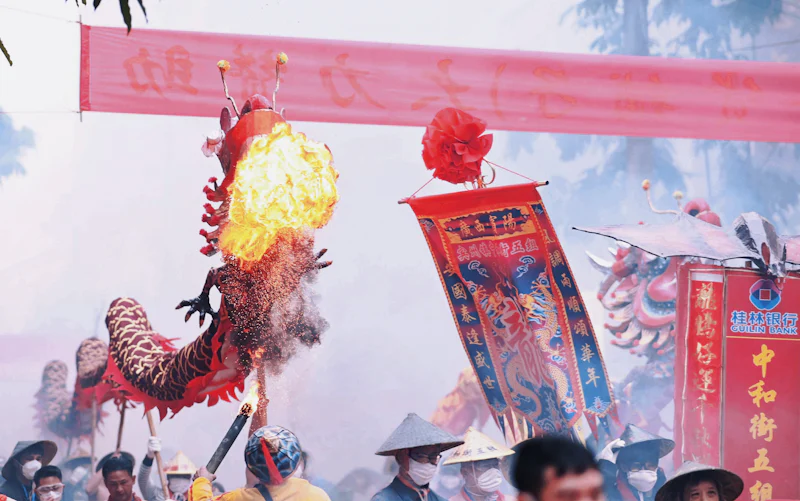
Chinese festivals are a vibrant reflection of the country’s long history, agricultural roots, and deep-seated family values. Most traditional festivals follow the lunar calendar, meaning their dates on the Gregorian calendar change every year.
The “Big Four” Traditional Festivals
The most significant celebrations in the Chinese calendar are often categorized into four major events that are officially recognized with public holidays.
- Spring Festival (Chinese New Year): The most important holiday in China. It marks the beginning of the lunar year and lasts for 15 days. It is characterized by the world’s largest human migration as people return home for “reunion dinners.” Traditions include setting off fireworks, giving red envelopes (hongbao), and eating dumplings in the north or rice cakes (niangao) in the south.
- Qingming Festival (Tomb-Sweeping Day): Observed in early April, this is a time for families to visit the graves of their ancestors. People clean the tombstones, offer food and tea, and burn ritual paper. It is also a time to celebrate the onset of spring with outdoor activities like kite flying.
- Dragon Boat Festival (Duanwu Jie): Occurring in June, this festival commemorates the poet Qu Yuan. The highlights are dragon boat races—long, narrow boats paddled by teams to the beat of a drum—and eating zongzi, which are sticky rice dumplings wrapped in bamboo or reed leaves.
- Mid-Autumn Festival (Zhongqiu Jie): Often called the “Moon Festival,” it falls in September or October. It is a harvest festival second only to Chinese New Year in importance. Families gather to admire the full moon and share mooncakes, dense pastries with various sweet or savory fillings.
Other Significant Traditional Observances
- Lantern Festival: Marking the end of the Spring Festival period, this night is celebrated with colorful lantern displays and the eating of tangyuan (sweet glutinous rice balls).
- Double Ninth Festival (Chongyang Jie): A day dedicated to the elderly. Traditionally, people climb mountains or high places to pray for longevity and health.
- Qixi Festival: Known as the Chinese Valentine’s Day, based on the romantic legend of the Weaver Girl and the Cowherd.
Modern and Statutory Holidays
In addition to the lunar festivals, China observes several fixed-date holidays:
- National Day (October 1st): Commemorates the founding of the People’s Republic of China. This kicks off "Golden Week," a seven-day holiday where hundreds of millions of people travel domestically.
- Labor Day (May 1st): A multi-day break often used for short-distance travel and tourism.
- Singles’ Day (11.11): While not a traditional festival, November 11th has evolved into the world’s largest 24-hour online shopping event, overshadowing Black Friday in terms of total sales volume.
Cultural Significance of Food
Nearly every festival in China is tied to a specific dish. These foods are rarely just about nutrition; they are symbolic. For instance, fish is eaten during the New Year because the word for fish (yú) sounds like the word for "surplus," representing a wish for wealth in the coming year.
#ChineseFestivals #SpringFestival #MidAutumnFestival #ChinaTravel #ChineseCulture
