Chongqing’s urban landscape is unequivocally unique within China, standing in stark contrast to the grid-based, flat layouts found in cities like Beijing or Shanghai. While many Chinese metropolises share common planning philosophies, the "Mountain City" of 山城 (Shānchéng) defies traditional urban development by embracing its rugged topography. This creates a multi-layered, vertical experience that feels more like a lived-in sci-fi set than a conventional municipal area. For anyone seeking to understand the extreme versatility of Chinese city aesthetics, Chongqing represents the absolute pinnacle of adaptation to challenging natural terrain.
The Architecture of Verticality
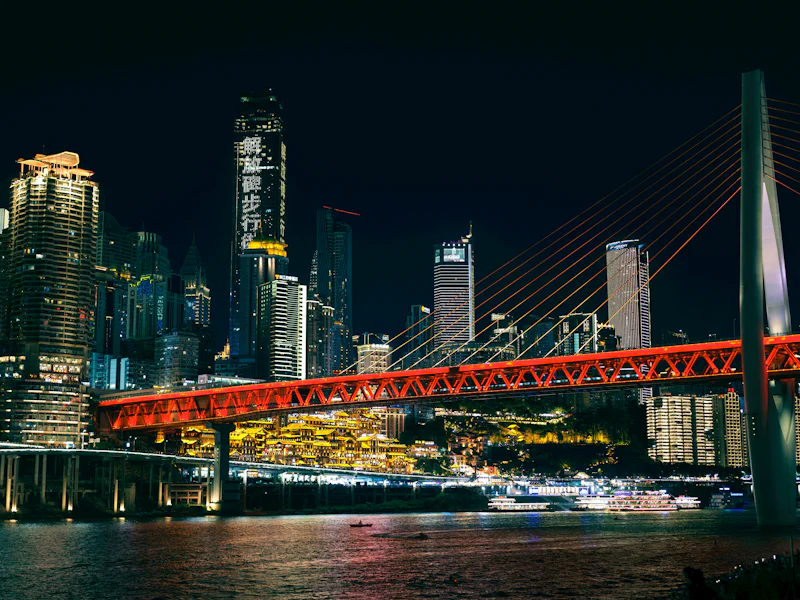
Chongqing’s geography—a dense confluence of the Yangtze and Jialing rivers surrounded by mountains—forced architects to build upward and inward rather than outward. This results in the surreal phenomenon where a building’s first floor might be at the street level, while its tenth floor also opens directly onto a different street on a higher elevation. Navigating the city is less about GPS coordinates and more about vertical positioning. You will frequently find yourself in a shopping mall where you exit the elevator to discover you are on a bridge or a balcony overlooking a road located several stories below.
The Cyberpunk Aesthetic Reality
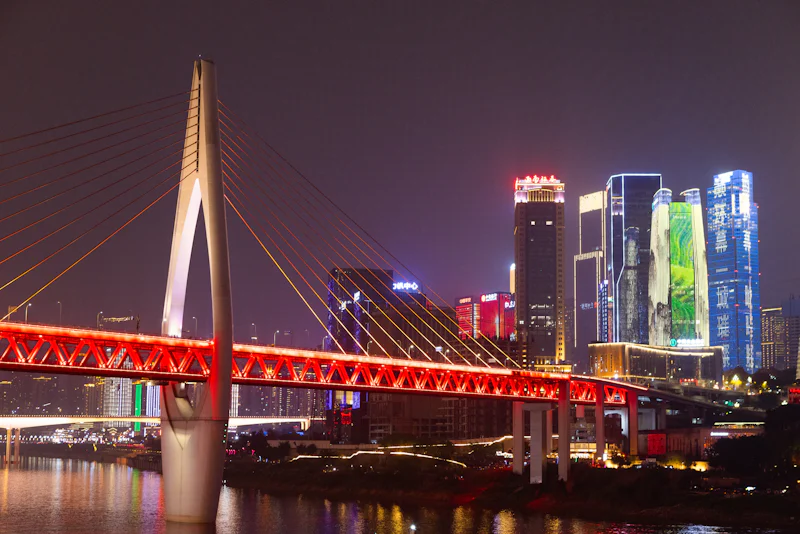
The perception of Chongqing as a "cyberpunk" city is grounded in its infrastructure. Because the land is limited, the city integrates public transportation in ways unseen elsewhere. The 轨道交通 (Guǐdào Jiāotōng), or rail transit system, is famous for passing directly through residential apartment buildings, a feat of engineering necessitated by the lack of space. At night, the humid atmosphere, mixed with the neon lights of the 解放碑 (Jiěfàngbēi) commercial district and the endless layers of bridge structures, creates a visual density that feels cinematic. Unlike the sterile, modern skylines of newer districts in other cities, Chongqing’s aesthetic is raw, industrial, and deeply layered.
Living the Mountain City Experience
For those relocating or traveling, Chongqing offers a lifestyle that requires a different approach to navigation. Walking distances can be deceptive; a destination might appear to be 500 meters away on a map, but the path may involve hundreds of steps. Relying on apps like 高德地图 (Gǎodé Dìtú), the primary mapping tool in China, is essential, but it often struggles with multi-level building entrances. Expect to frequently use elevators meant for public transit or connection between distinct neighborhood levels. The city is a test of stamina, and the local preference for spicy 火锅 (Huǒguō) or hot pot is often jokingly attributed to the need to combat the damp, mountainous climate.
Why Chongqing Remains Essential
While cities like Shenzhen represent the rapid, orderly future of China, Chongqing represents the chaotic, imaginative potential of Chinese urban design. It is not just a place to visit for the sights; it is a case study in how a population can thrive in an environment that theoretically shouldn't support a city of over 30 million people. The blend of traditional 吊脚楼 (Diàojiǎolóu) stilt-house architecture influences and massive modern concrete structures makes it the most distinct urban environment in the country.
Understanding a city like Chongqing changes your entire perspective on how human infrastructure can be forced to adapt to the constraints of nature.
Which neighborhood in Chongqing do you find most difficult to navigate due to its vertical layout?
Quick Takeaways:
- Utilize mapping apps like Gaode Ditu to navigate complex multi-level street layers.
- Expect vertical travel as buildings often have entries on multiple distinct street levels.
- Prepare for significant walking since the terrain makes standard horizontal grids impossible.
- Visit during the evening to see the full extent of the architectural lighting.
#chongqing #chinesecities #urbandesign #expatchina
