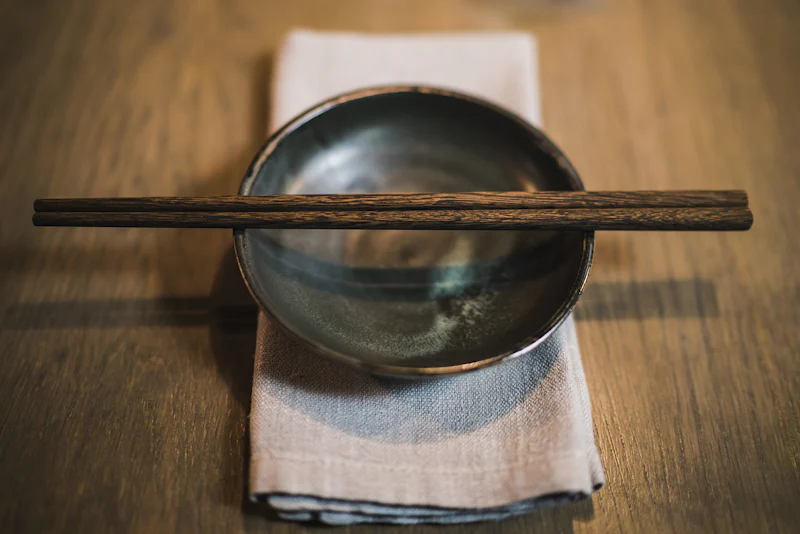
The Essential Tool of Chinese Dining
Yes, chopsticks are the primary eating utensil in China and have been for over 5,000 years. For the vast majority of people in China, using chopsticks is as natural as breathing. They are used for almost every meal—from picking up delicate grains of rice to swirling long noodles and grabbing pieces of stir-fried meat. It is estimated that roughly 45 billion pairs of chopsticks are used in China annually.
Design and Characteristics
Chinese chopsticks, known as kuàizi, have a specific design that distinguishes them from those used in neighboring countries like Japan or Korea:
- Shape and Length: Chinese chopsticks are typically longer and thicker. The extra length is practical for "family-style" dining, allowing people to reach dishes placed in the center of a large table.
- The Tips: They usually have blunt, squared-off, or rounded ends rather than sharp points.
- Materials: While plastic and melamine are common in restaurants, traditional household sets are often made of bamboo, wood, or lacquered material.
Why Chopsticks Instead of Forks?
The dominance of chopsticks is closely tied to how Chinese food is prepared. In Chinese cuisine, ingredients are almost always pre-cut into bite-sized pieces before they reach the table. This eliminates the need for a knife at the dinner table. Confucius, the famous philosopher, also famously associated knives with violence and "the slaughterhouse," suggesting that they had no place in an elegant dining setting.
The Role of the Spoon
While chopsticks are the main tool, they are not the only tool. Spoons (typically ceramic or plastic) are essential for:
- Soup: Chinese meals almost always include a soup, which is eaten with a wide-bottomed spoon.
- Rice: While many people use chopsticks to push rice into their mouths from a bowl held close to the face, some prefer using a spoon, especially for younger children.
Essential Chopstick Etiquette
In China, how you handle your chopsticks carries significant social weight. There are several "taboos" that every visitor should know:
- The Funeral Omen: Never stick your chopsticks vertically into a bowl of rice. This resembles incense sticks at a shrine for the dead and is considered an extremely bad omen.
- No Pointing: Using your chopsticks to point at someone is seen as aggressive and rude.
- Tapping the Bowl: Avoid tapping your bowl with your chopsticks, as this is associated with beggars asking for food.
Modern Trends: Serving Chopsticks
Since the global health events of recent years, there has been a significant push in China toward using "serving chopsticks" (gōngkuài). In a shared meal, a separate pair of chopsticks (often a different color) is placed with each dish so that diners don't use their personal utensils to touch the common food. This practice is now common in high-end restaurants and health-conscious households.
#ChineseCulture #ChopstickEtiquette #DiningInChina #ChineseTraditions #FoodCulture
