The bread you likely encountered in Zhangjiajie is known as 'shaobing' (烧饼), a versatile category of traditional Chinese bread often prepared in a cylindrical clay oven that functions similarly to a tandoor. These flatbreads are a staple of northern and central Chinese street food, characterized by their crispy, layered exterior and savory or sweet fillings. While recipes vary by province, the basic technique involves folding layers of dough with oil or lard before pressing them onto the hot walls of an oven, resulting in a distinct, chewy, and smoky flavor profile that defines regional street snacks.
The Anatomy of Chinese Flatbreads
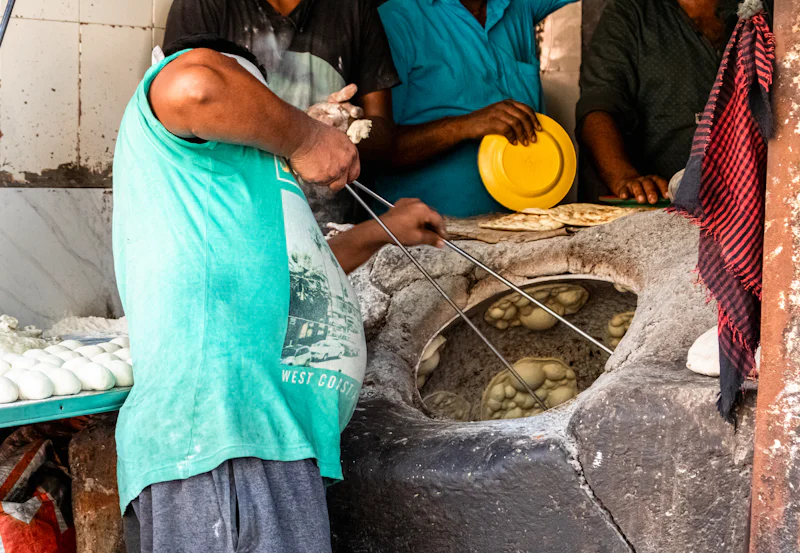
Not all flatbreads are identical, and identifying them requires looking at both the texture and the cooking method. The shaobing category is generally split into 'hard-crust' and 'soft-crust' varieties. In areas like Zhangjiajie, you will frequently find the hard-crust version, which is coated in toasted sesame seeds and baked until golden brown. The dough relies on a 'laminated' technique, where the pastry is folded multiple times with soybean oil or lard to create flaky layers. If you see a vendor using a large, round charcoal oven, they are likely making gongbing (公饼) or 'tandoor-style' flatbreads, which are often baked plain or with a light scallion oil seasoning.
Deciphering Mandarin Menu Terms
When navigating a local street food stall, keep an eye out for specific characters that describe the preparation. If the menu says xian (馅), it indicates a filling, which can range from spiced minced pork or beef to red bean paste or preserved vegetables. Another common term is ceng (层), meaning layer, which highlights the quality of the bread—a good flatbread should have thin, visible layers throughout the center. If you want to ask for a specific type, you can use the phrase 'Zhe ge shi shen me?' (这个是什么? - What is this?), followed by pointing at the oven. Most vendors take pride in their craft and will happily explain whether the bread is salty (xian - 咸) or sweet (tian - 甜).
Techniques Behind the Flavor
The reason these breads taste so different from Western-style baked goods is the use of high-temperature dry heat. By pressing the dough directly onto the wall of a clay oven (tang-lu - 炭炉), the exterior undergoes a rapid Maillard reaction, sealing in moisture while creating a crunchy crust. This 'tandoor-style' technique is highly efficient for street vendors, as a single oven can bake dozens of pieces in minutes. Because the heat source is often charcoal, the bread absorbs a subtle, earthy aroma that electric ovens simply cannot replicate. If you find a stall with a line of locals, it is a strong indicator that the vendor is using high-quality flour and maintaining their oven at the optimal temperature, usually around 200 to 250 degrees Celsius.
Tips for First-Time Tasters
When ordering, always look for the freshest batches, typically identified by the steam still rising from the center. It is common practice to eat these while walking, and they are usually served in a small paper bag. If you are ordering a meat-filled version, ensure it is served piping hot, as the internal temperature of the filling needs to be thoroughly heated for safety. You can ask for extra spice by saying 'Jia la' (加辣 - add spice), as many regional breads are paired with a local chili oil or paste that highlights the savory notes of the dough.
Mastering the variety of flatbreads in China is simply a matter of learning the regional terms for dough-based street food and understanding the oven techniques used to bake them. Have you found any other regional variations of flatbread that differ significantly from the ones you tasted in Zhangjiajie?
Quick Takeaways:
- Shaobing is a broad term for diverse, oven-baked traditional Chinese flatbreads.
- Look for clay ovens to find the most authentic tandoor-style bread textures.
- Ask for xian to identify filled breads or tian for sweet varieties.
- Freshness is best judged by steam and a steady line of local customers.
#chinesefood #streetfood #travelchina
