The Diversity of Chinese Cuisine
Chinese food is not a single monolith but a vast collection of regional cuisines influenced by geography, climate, and history. While Western "takeout" often focuses on fried meats and heavy sauces, authentic Chinese home cooking is remarkably balanced, prioritizing fresh vegetables, seasonal ingredients, and a variety of cooking techniques like steaming, stir-frying, and braising.
The North-South Staple Divide
One of the most significant distinctions in the Chinese diet is the choice of staple grain:
- The Wheat North: In Northern China, where the climate is colder and drier, wheat is the primary crop. People here eat noodles, dumplings (jiaozi), steamed buns (baozi or mantou), and various flatbreads (bing).
- The Rice South: In the warmer, wetter South, rice is the undisputed king. It is served steamed with almost every meal, fried with leftovers, or boiled into a comforting porridge known as congee (zhou).
Common Proteins and Vegetables
Unlike the large portions of meat common in Western diets, Chinese meals often use meat as a flavoring or one component of a shared dish.
- Proteins: Pork is the most widely consumed meat in China. Chicken, beef, and a vast array of freshwater fish and seafood are also staples. Tofu (soybean curd) is a primary protein source and is prepared in hundreds of ways—from silky and soft to firm or fermented.
- Vegetables: A Chinese meal is incomplete without greens. Common vegetables include Bok Choy, Gai Lan (Chinese broccoli), water spinach, lotus root, and various types of mushrooms and radishes.
The Eight Great Regional Cuisines
Chinese food is traditionally categorized into the "Eight Great Cuisines," each with a distinct flavor profile:
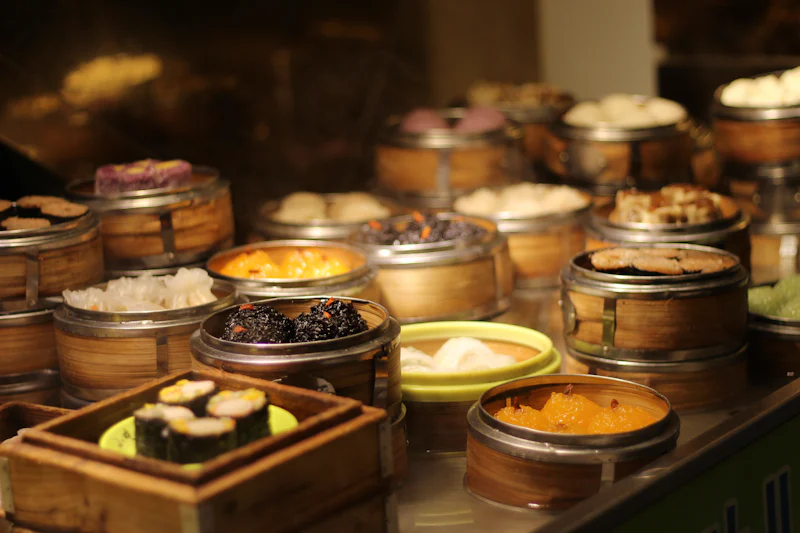
- Cantonese (Yue): Fresh, light, and focused on natural flavors (e.g., Dim Sum, steamed fish).
- Sichuan (Chuan): Famous for bold, spicy, and "numbing" (málà) flavors using Sichuan peppercorns.
- Hunan (Xiang): Known for being even spicier than Sichuan food, using fresh chilies rather than peppercorns.
- Shandong (Lu): Known for its salty, savory flavors and focus on seafood and soups.
- Fujian (Min), Jiangsu (Su), Zhejiang (Zhe), and Anhui (Hui): These regions emphasize delicate techniques, seafood, and the balance of sweet and savory.
A Typical Day of Eating
- Breakfast: Varies by region but commonly includes hot soy milk with fried dough sticks (youtiao), savory congee, or a quick bowl of noodles.
- Lunch and Dinner: These are usually shared "family style." Several dishes—vegetables, a meat dish, and perhaps a soup—are placed in the center of the table for everyone to share, accompanied by individual bowls of rice or noodles.
Tea Culture
Tea is the universal beverage in China. Whether it is Green, Oolong, Black, or Pu’er, tea is consumed throughout the day, often for its perceived health benefits and as a central part of social and business interactions.
#ChineseFood #RegionalCuisine #EatingInChina #ChineseDiet #FoodCulture
