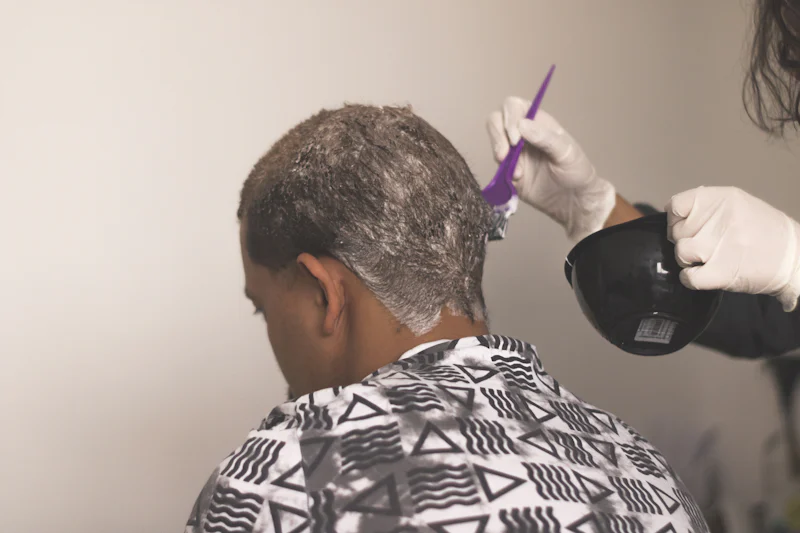
In recent decades, hair dyeing has transitioned from a rare phenomenon to a mainstream beauty ritual in China. While natural black hair remains the standard, urban centers like Shanghai, Beijing, and Chengdu are filled with diverse hair colors. The market has grown exponentially, reflecting a broader social tolerance for individual expression.
Generational Differences and Motivations
The reasons for dyeing hair vary significantly across age groups:
- The Younger Generation (Gen Z): For those born after 1995, hair color is a primary tool for self-expression. Influenced by K-pop idols and “ACG” (Anime, Comic, and Games) culture, many opt for bold shades like ash gray, platinum blonde, pink, or blue.
- The Older Generation: Middle-aged and elderly Chinese people frequently dye their hair, but almost exclusively to cover gray hair. For this demographic, maintaining a youthful, natural black appearance is the priority.
Popular Trends: From “Maillard” to “Natural”
While high-fashion colors are popular in creative circles, the most common choices for working professionals are subtle. Shades of brown, chestnut, and maroon are favored because they complement East Asian skin tones and remain “office-safe.” Recently, the “Maillard” style—characterized by layers of warm browns and tan—has become a major trend on social platforms like Xiaohongshu.
Hair Dyeing as a Rite of Passage
In China’s rigorous education system, most middle and high schools strictly forbid dyed hair. Consequently, dyeing one’s hair has become a symbolic rite of passage for high school graduates. Immediately following the Gaokao (National College Entrance Exam), many students flock to salons to experiment with color for the first time as a sign of their new independence.
Professional and Social Constraints
Despite growing acceptance, certain environments remain conservative:
- Restricted Professions: Government officials, police officers, nurses, and teachers are generally expected to maintain natural hair colors to project a serious and professional image.
- Regional Variation: While “exaggerated” colors are common in Tier 1 cities, they may still draw unwanted attention or judgment in rural or more traditional areas.
The DIY Market
Because professional salon services in major cities can be expensive, the DIY hair dye market is booming. International brands like L’Oreal and Schwarzkopf, along with Japanese and Korean bubble hair dyes, are popular choices for young people looking to change their look at home.
#HairDye #ChinaBeauty #GenZChina #ChineseTrends #SelfExpression
