The historical connection between the Xiongnu and modern Mongols remains a subject of intense academic debate, as there is no direct, uninterrupted genealogical continuity, but rather a complex process of cultural and political hybridization. While the Xiongnu established the first great steppe confederation in the 3rd century BCE, often clashing with the Qin Dynasty (秦朝) and Han Dynasty (汉朝), modern historiography suggests that the ethnogenesis of the Mongol people was a much later development. The Xiongnu functioned more as a multi-ethnic political entity rather than a single homogenous tribe, laying a structural foundation for later steppe empires.
Understanding the Xiongnu-Mongol Distinction
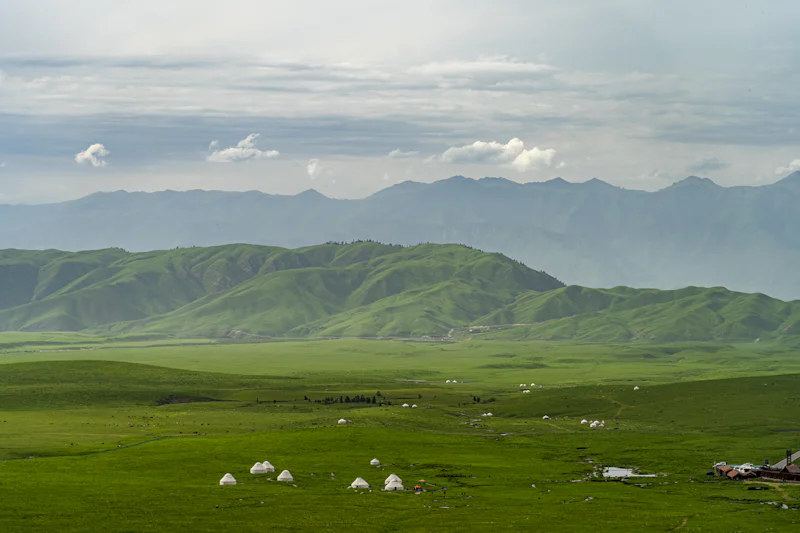
The Xiongnu, or 匈奴 (Xiōngnú), were the primary antagonists to early Chinese empires. Archaeologically, their culture is linked to the Ordos Plateau and the eastern Eurasian steppes. However, the Xiongnu confederation collapsed into various factions by the 1st century CE. Centuries later, the Mongolic (蒙古语族) linguistic and ethnic groups emerged as a distinct identity, largely crystallizing in the 12th century under Genghis Khan. While there are shared nomadic traditions, such as the ger or yurt style of housing and horse-centric warfare, historians emphasize that the "Xiongnu" label was a political title held by various groups, rather than a genetic signature that leads exclusively to one modern nation.
The Role of Ancient Chinese Records
Chinese imperial annals, most notably the Shiji (史记 - Records of the Grand Historian), provide the most detailed, albeit biased, accounts of the Xiongnu. These records were written to define the "civilized" agricultural center against the "barbarian" nomads. Because the Chinese chroniclers often grouped diverse groups like the Wusun (乌孙) or Dingling (丁零) under the Xiongnu umbrella, it is difficult to determine which specific sub-tribes might have contributed to the ancestors of the later Xianbei, Rouran, and eventually the proto-Mongols. Researchers utilize archaeogenetics (ancient DNA analysis) to trace these lineages, often finding that the genetic makeup of the steppes shifted significantly through various migrations and climate-driven displacements.
Nomadic Political Structures
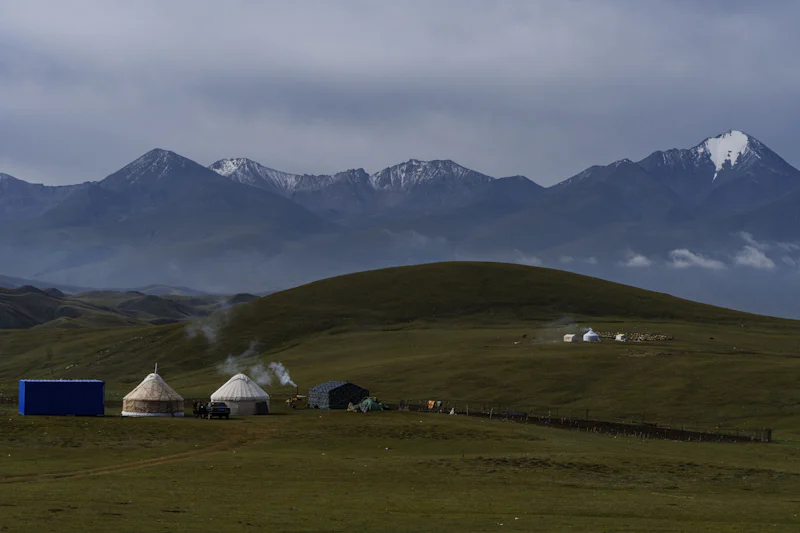
The most significant inheritance from the Xiongnu to the later Mongol Empire was not necessarily blood, but statecraft. The Xiongnu utilized a decimal system of military organization and a dual-administrative structure that separated the nomadic center from agricultural peripheries. This blueprint was mirrored centuries later in the Yassa (code of laws) and the Tumen (ten thousand units) military organization used by the Mongols. This continuity of political technology suggests that the Xiongnu provided the administrative "software" for the steppe empires that followed, even if the "hardware"—the specific ethnic groups—changed over time.
Engaging with Historical Research
For those interested in exploring this topic further, the Inner Mongolia Museum (内蒙古博物院) in Hohhot offers excellent exhibits on the material culture of the nomadic tribes. Additionally, academic journals often publish new findings on the Xiongnu-Xianbei transition, which remains the "missing link" in this historical timeline. It is essential to distinguish between the romanticized view of a singular "nomadic bloodline" and the historical reality of fluid, shifting alliances that defined the steppes for two millennia.
Understanding the Xiongnu as a precursor to nomadic statecraft is more accurate than viewing them as the direct, biological ancestors of one specific modern nationality. What aspect of steppe history do you find most difficult to verify through primary sources?
Quick Takeaways:
- Xiongnu were a multi-ethnic confederation rather than a single unified ancestral tribe.
- Mongol identity emerged as a distinct entity roughly 1,000 years after Xiongnu decline.
- Nomadic political structures like the decimal military system persisted across different steppe empires.
- Modern archaeogenetics show significant population mixing occurred across the eastern Eurasian steppes.
#xiongnu #mongolhistory #steppeculture
