Finding a reliable barber for European hair in China requires moving beyond local walk-in salons and utilizing digital tools to locate stylists experienced in non-Asian hair textures. While many neighborhood shops excel at standard Chinese cuts, the specific requirements of Western hair—such as density, curl patterns, and weight removal—often necessitate a more specialized approach. The most effective strategy involves searching for expat-oriented salons in major business districts or using localized review platforms like 大众点评 (Dazhong Dianping) to filter for high-end shops that cater to international clientele.
Using Digital Platforms to Identify Salons
The most powerful tool for finding a barber is 大众点评 (Dazhong Dianping). Open the app and search using English terms like “hair salon” or “barbershop” alongside your city name. Look for shops with a high number of reviews and a rating above 4.5. Within these profiles, examine the user-uploaded photos. If you see customers with diverse hair types, that is a strong indicator of competency. Another option is checking 小红书 (Little Red Book), which often features recommendations from international students and long-term expats in cities like Yiwu or Shanghai. Look for hashtags related to your city to find stylists who have demonstrated success with non-Asian hair.
Communicating Your Hairstyle in Mandarin
Language barriers are often the biggest hurdle. When you sit in the chair, do not rely on vague descriptions. Bring 3 to 5 clear reference photos showing the haircut from the front, sides, and back. If you want a specific fade, use the term 渐变 (jiànbiàn), which translates to gradient or fade. If you need weight removed, ask for 打薄 (dǎbó). Avoid saying “short” generically, as this often leads to the stylist buzzing the sides too high. Instead, use your fingers to gesture the exact length in centimeters. It is helpful to write these terms down in 微信 (WeChat) and show them to the stylist to ensure clarity before the scissors come out.
Navigating Salon Tiers and Pricing
There is a distinct difference between neighborhood barbershops and premium salons in international malls. Neighborhood shops are affordable, often costing between 30 and 80 RMB, but they may lack experience with European hair textures. Premium salons in commercial districts, often staffed by stylists with international training, charge between 200 and 600 RMB. While the price difference is significant, the investment is often worth it for the first visit to ensure a baseline quality that local stylists can replicate later. Once you find a stylist you like, add them on 微信 (WeChat) to book future appointments directly, which builds rapport and ensures consistency.
Managing Expectations and Maintenance
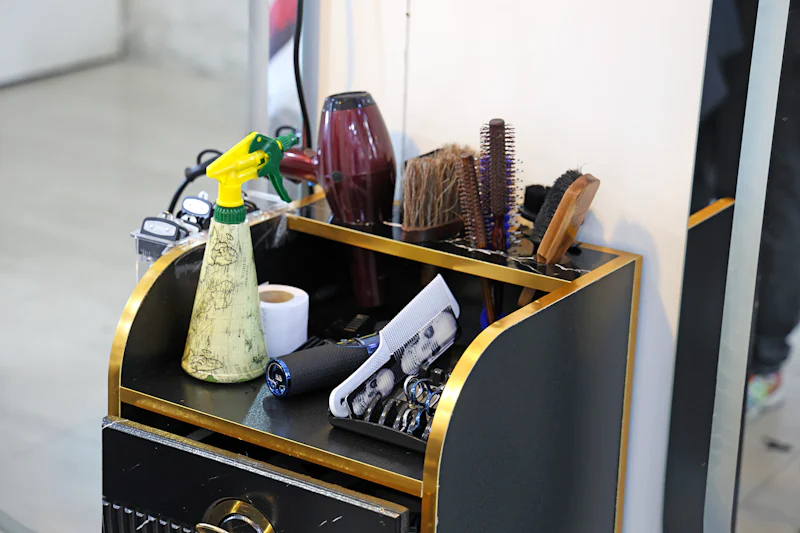
European hair often requires different grooming tools, such as professional-grade thinning shears or specialized clippers. If your hair is particularly curly or thick, you may want to bring your own styling products if you have specific preferences, as Chinese salons typically stock products tailored for straight, fine hair. During your appointment, observe the stylist’s technique. If they struggle with sections or seem unfamiliar with texturizing tools, it is better to stop the session early rather than risking a cut you will dislike for the next month.
Success in finding a barber comes down to using photographic evidence and digital reviews rather than relying on chance walk-ins.
What is the biggest challenge you have faced when communicating your haircut preferences to a stylist in China?
Quick Takeaways:
- Search for top-rated salons using the 大众点评 (Dazhong Dianping) mobile application.
- Always carry at least three reference photos showing the style from different angles.
- Use the specific term 渐变 (jiànbiàn) when asking for a professional-grade fade.
- Build a relationship with one stylist by communicating directly via 微信 (WeChat).
#expatchina #haircare #culturelanguge
