If you’re in the US and can’t visit a Chinese consulate in person, you’ll need to submit your COVA form and passport through a third-party agency or a courier service. This guide walks you through the exact steps, how to pick a reputable agency, and what nearly everyone forgets until it’s too late.
The most important thing to know upfront: you must use an agency or courier service that is registered with the Chinese consulate you’re applying through. Not all “China visa agencies” are authorized, and sending your passport to the wrong address can cost you weeks — or your passport.
What Is the COVA Form and Why You Can’t Skip It
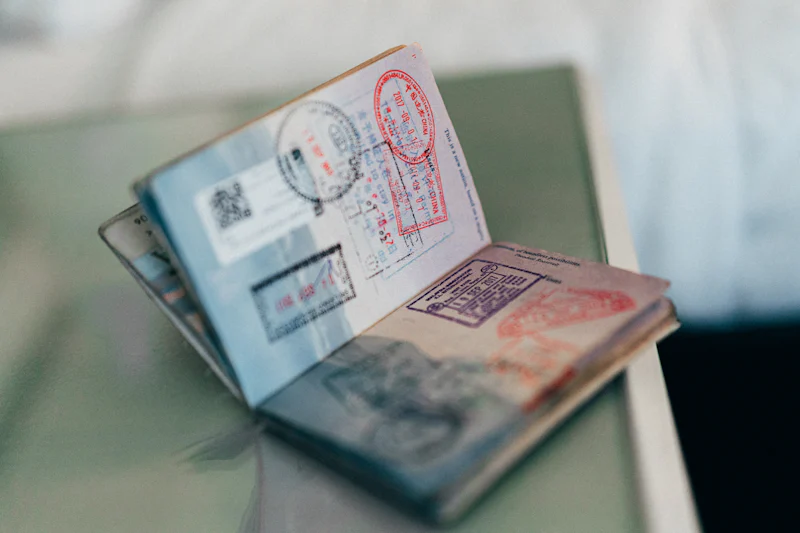
The COVA (China Online Visa Application) form is the mandatory electronic application you fill out on the Chinese Visa Application Service Center (CVASC) website. Once completed and submitted, you’ll receive a confirmation page with a barcode. That barcode is what ties your physical passport to the online record.
You cannot print the COVA form and mail it directly to a consulate. All Chinese consulates in the US now require that even in-person applicants use a CVASC center or an appointed agency. For mail-in, the consulate will only accept applications submitted by pre-approved courier or agency partners.
Key detail: The COVA confirmation page must be printed on plain paper (no special paper), and you must fill out the “Applicant’s Signature” field manually before mailing.
How to Find a Legitimate China Visa Agency in the US
Not all agencies are created equal. The safest way is to check the Chinese embassy or consulate website for your jurisdiction (e.g., Los Angeles, Chicago, New York, San Francisco, Washington D.C.). Each consulate website maintains a list of “designated visa application service centers” or “accredited courier services.” If an agency isn’t on that list, do not use them.
Reputable agencies typically charge between $80 and $180 for the visa processing fee plus courier handling (not including the visa fee itself, which is separate). If you see an agency offering a “rush” for under $50, that’s a red flag.
Concrete scenario: A foreigner living in Texas wants to apply through the Chinese Consulate in Houston. The Houston consulate no longer accepts walk-ins. The only way is to mail the passport and COVA form to the China Visa Application Service Center (CVASC) in Houston — which is a physical office that accepts packages from FedEx or UPS, not from USPS. The agency must be the one listed on the consulate’s “Accredited Service Agencies” page.
Step-by-Step Process: From COVA to Passport in the Mail
- Complete the COVA form online. Use the official website:
https://cova.cs.mfa.gov.cn. Select the correct consulate jurisdiction based on your state.
- Print and sign the COVA confirmation page. Also print the photo requirements page.
- Gather supporting documents. Usually: original passport, one passport photo meeting Chinese specs (check size and background color), proof of travel (flight itinerary or hotel booking), and any required invitation letters.
- Choose your agency. Either a CVASC (for mail-in) or a private authorized agency. If using a CVASC, you can usually mail directly to their address using a trackable service like FedEx or UPS. If using a private agency, they will provide their own shipping label.
- Pack securely. Place passport and documents in a padded envelope. Include a self-addressed prepaid return envelope (USPS Priority Mail, FedEx, or UPS) with tracking. Some agencies require a separate form for return shipping.
- Ship and wait. Typical processing time is 4–7 business days for standard processing, 2–3 for rush. The agency will upload your tracking updates or email you.
Critical time detail: Do not mail your passport more than 30 days before your planned departure. Chinese consulates generally issue visas with a validity window starting from the date of issue, not from your travel date. Mailing too early can result in a visa that expires before you leave.
What People Usually Miss
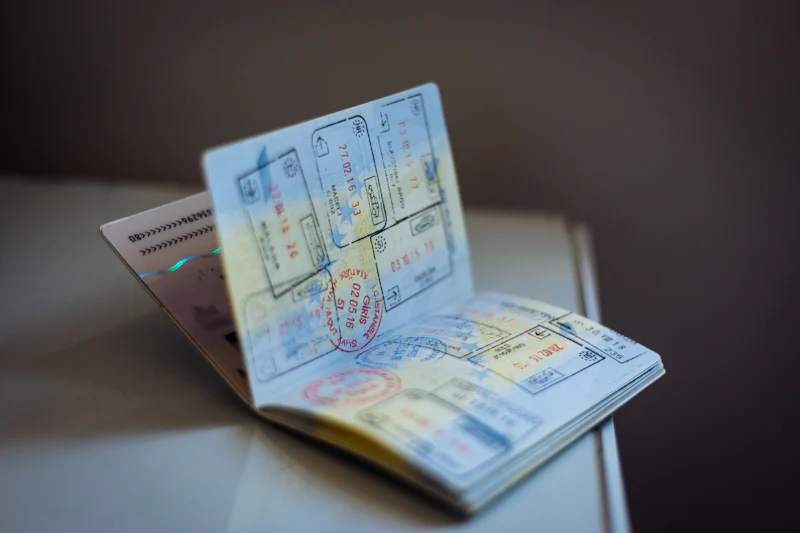
The one detail that trips up most first-timers: the consulate will not return your passport if you use USPS for outbound shipping, unless the agency specifically allows it. Several Chinese consulates (especially New York and San Francisco) explicitly state that USPS is not accepted because their mail rooms do not coordinate with USPS for signature capture. Use FedEx or UPS for the outbound leg.
Another easily overlooked step: the COVA form has a “Passport Number” field that must exactly match the passport you send. If you recently renewed your passport and the COVA form still shows the old number, the application will be rejected. Double-check the barcode page for the correct passport number.
Also, many applicants forget that the photo must be taken within the last 6 months and show a white background with a specific face size ratio. A photo that passes at the airport or for a US passport will often be rejected for China visa. Use a dedicated photo service that knows Chinese visa requirements (CVASC offices have on-site photo booths, but you can’t use them if mailing). A good alternative: use an app that formats passport photos to Chinese specs and print at a pharmacy.
Safety Tips for Mailing Your Passport
- Use a trackable, insured shipping method. FedEx and UPS both offer insurance up to $500 by default. You can buy additional insurance for the value of your passport (typically $100–$200).
- Never send your passport without a tracking number. That sounds obvious, but people still do it.
- Make a photocopy of your passport bio page and COVA confirmation before mailing. Keep digital copies in a secure cloud folder.
- Verify the agency’s physical address. Call the consulate’s visa office and ask: “Is [agency name] your authorized service provider for my jurisdiction?” If they can’t confirm, don’t send.
- Check online reviews on forums like VisaJourney or Reddit’s r/Chinavisa for recent experiences. An agency that worked fine last year might have changed hands.
What to Do If Your Passport Is Lost in Transit
Extremely rare, but it happens. If tracking shows “delivered” but the agency says they never received it, immediately file a missing package claim with the courier. At the same time, contact the nearest U.S. passport agency to start a passport replacement. You can request a “passport expedite” letter from the Chinese consulate to help speed up the new passport application, but that process takes weeks.
If the agency admits they lost it, demand they reimburse the declared value plus your visa fee. Reputable agencies carry insurance for exactly this scenario. That’s why it’s worth paying a bit more for a well-known agency.
When was the last time you successfully mailed your COVA form and passport to a Chinese consulate? Did you use a CVASC or a private agency, and was the process smooth or full of surprises? Please share your recent experience below — things change fast, and the community needs current data.
