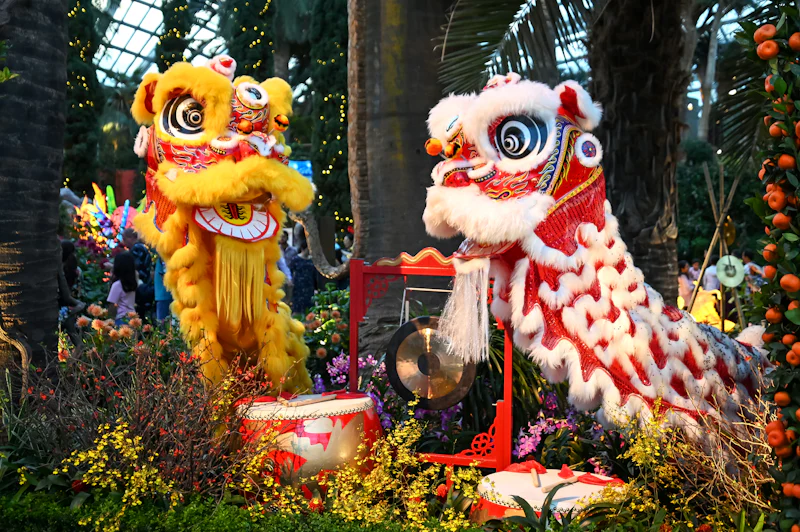
In the social media feeds of early 2026, a specific hashtag has been capturing the global imagination: #BecomingChinese. This isn't just a digital fad; it is a reflection of a massive physical shift in travel and cultural participation. During the recent Spring Festival, travel data revealed a surge in international interest, with flight bookings by non-Chinese passport holders rising by nearly 30% year-on-year, and some platforms reporting a fourfold increase in ticket sales for foreign travelers entering China.
From "Spectacle" to "Practice"
For decades, the Spring Festival was often viewed by global audiences as an exotic "other" — a colorful display of lions and dragons to be watched from a distance. However, 2026 marks a turning point. Today, the festival is transitioning into a "self-practice," where international visitors and residents actively participate in the rituals to enhance their own quality of life and seek spiritual comfort.
This shift suggests that the appeal of the Lunar New Year now lies deeper than mere symbolism. It has become a lived philosophy that addresses several modern needs.
A Philosophy of Renewal and Healing
Unlike the linear progression of time often felt in the West, the Spring Festival represents a cyclical rhythm of nature. It is the “Start of Spring,” a time for the world to wake up and for individuals to reset. In a modern society where time is often treated as an exhausting resource, the rituals of the New Year offer a collective opportunity for healing, integration, and a fresh start.
The Strength of Social Connection
The core of the Spring Festival is "reunion" (tuan yuan), a social model built on high-density and high-certainty connections.
- Mutual Responsibility: Traditions like the "New Year’s Eve Dinner" and "Red Envelopes" are more than just customs; they are mechanisms that confirm responsibilities between generations.
- Emotional Support: By reinforcing these bonds, the festival provides a social support network that offers warmth in an increasingly fragmented world.
Balancing the Sacred and the Secular
One of the most unique aspects of the Spring Festival is how it maintains an equilibrium between the spiritual and the mundane. It requires both the solemnity of ancestor worship and the joy of feasting and celebration. In the Chinese cultural context, "living a prosperous life" is seen as a form of spiritual cultivation. This blend of the sacred and the everyday allows modern participants to find a sense of transcendence without leaving their secular lives.
A Shared Global Future
While the social media hype around #BecomingChinese might partly stem from a search for new life perspectives, the underlying trend is clear: the cultural spirit of the Spring Festival is intersecting with the needs of a globalized public. Cultural exchange is moving from a "swap of symbols" to a "communion of meaning." When a thousand-year-old tradition can be translated into a universal language for the modern day, it ceases to be the nostalgia of a single ethnic group and becomes a spiritual connection point for all of humanity.
#SpringFestival2026 #BecomingChinese #TravelChina #CulturalExchange #LunarNewYear
