Finding the best cafes for remote work in China goes beyond just good coffee; the key differentiators are reliable Wi-Fi, ample power outlets, and an environment that welcomes long stays. While international chains are a safe bet, many independent cafes offer a better atmosphere and stronger internet, provided you know what to look for. The unwritten rule is to order a new item every two to three hours. This simple gesture signals you respect the space and transforms you from a Wi-Fi squatter into a valued regular, ensuring a productive and welcoming work environment across China's diverse cities.
Shanghai: Polished and Professional Workspaces

As China’s commercial hub, Shanghai offers a mature ecosystem of laptop friendly cafes. Chains like Wagas, Baker & Spice, and Seesaw Coffee are designed with remote workers in mind, often featuring dedicated large tables with abundant power outlets. In these spots, it’s common to see professionals working for hours. A key local tool is the cafe’s WeChat 小程序 (xiǎo chéng xù), or mini-program. You’ll often use it to order, pay, and sometimes even get the Wi-Fi password. Expect a bustling, focused atmosphere, especially in areas like Jing'an and Xuhui. The trade-off for this convenience is higher prices—a latte can easily cost 40-50 RMB—and crowded conditions during weekday lunch hours (12 PM to 2 PM).
Beijing: Hutong Charm and Modern Hubs
Beijing’s remote work scene is a tale of two cities. You can find quiet, atmospheric cafes tucked away in the historic hutongs (alleys) around Gulou and Andingmen, such as Metal Hands or Soloist Coffee. These spots offer a unique, inspiring work environment but can be a gamble regarding outlet availability and Wi-Fi stability. Always have a personal hotspot as a backup. Conversely, the business districts of Sanlitun and Guomao host modern cafes with reliable infrastructure akin to Shanghai's. A practical tip: Wi-Fi access often requires a Chinese phone number to receive a verification code. The password, or 无线网密码 (wúxiàn wǎng mìmǎ), is also frequently printed on the bottom of your receipt.
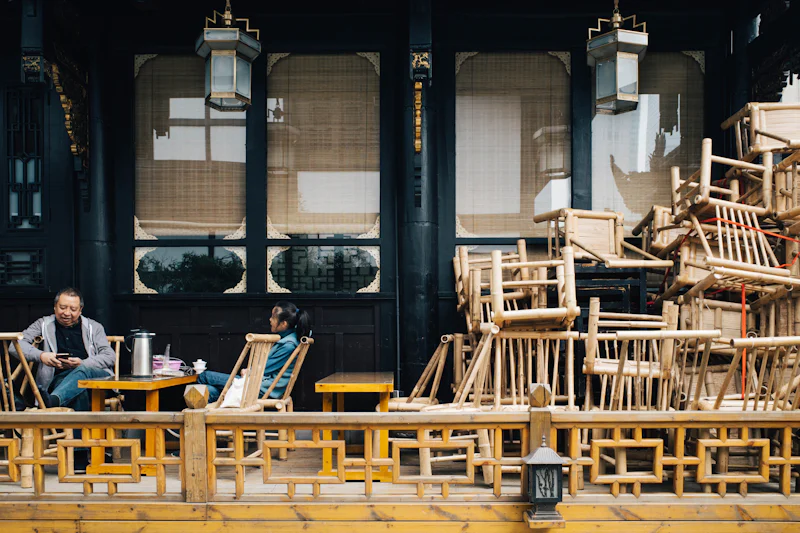
Dali: The Digital Nomad Community Hub
The vibe for a digital nomad in Dali China is less corporate and more community-focused. Cafes in Dali's Old Town or near Erhai Lake prioritize a relaxed, collaborative atmosphere over pure efficiency. Places like the Linden Centre's cafe or smaller independent spots are known for their strong, stable Wi-Fi and welcoming owners who are used to international visitors staying for long periods. The culture here is different; it's common to strike up conversations with other remote workers. Power outlets can be scarce, so arrive with a full battery. The upside is the lower cost of living—a great coffee might only be 25-35 RMB—and the priceless opportunity to network with a global community of creators and entrepreneurs.
Essential Cafe Work Etiquette
Regardless of the city, a few universal rules apply. Before you travel to a new cafe, use an app like 大众点评 (Dàzhòng Diǎnpíng)—China's version of Yelp—to search for the cafe’s name and check user photos and reviews for mentions of power outlets, which are called 插座 (chāzuò). During peak hours, avoid taking a four-person table by yourself. Most importantly, always make a purchase before asking for the Wi-Fi password. Being a considerate patron is the best way to ensure these valuable third spaces remain welcoming to the remote work community.
Ultimately, the perfect work cafe in China depends on matching its atmosphere to your workflow. What hidden gems have you discovered for remote work in your city?
Quick Takeaways:
- Use the Dianping app to check user photos for power outlets (插座) before you go.
- Plan to order a new drink or snack every 2–3 hours as a courtesy.
- A Chinese phone number is often required to receive a Wi-Fi verification code.
- Shanghai offers professional hubs; Beijing and Dali provide more atmospheric options.
#remoteworkchina #digitalnomad #chinacafes
