Interpreting older Chinese literature, such as the 'Four Great Classical Novels' or the poetic works of the Tang and Song dynasties, requires more than just language proficiency. It demands a shift in perspective, moving away from Western-centric literary analysis toward an appreciation of the philosophical and social frameworks that defined historical China. To truly unlock these texts, one must recognize that traditional Chinese literature functions as a repository of moral instruction, historical documentation, and aesthetic standards, rather than simply as narrative entertainment. By understanding the underlying context, you can bridge the gap between ancient ideals and modern reality.
Understand the Philosophical Foundations

The most critical step in engaging with Chinese classics is identifying the interplay between Confucian, Taoist, and Buddhist thought. Confucianism dictates the social structure, emphasizing filial piety, ritual propriety, and the burden of duty toward the state and family. If you read a story where a character makes a decision that seems illogical or overly self-sacrificing, check if they are acting according to Confucian virtues. Conversely, Taoist influence often appears in characters who reject societal constraints in favor of nature or internal alchemy. Recognizing these schools of thought allows you to decode a character’s motivations, which often prioritize collective stability over individual desire.
Contextualize Through Social Hierarchy
Many classic works explore the tension between the scholar-official class and the peasantry or merchant classes. The 'scholar-official' ideal—an intellectual who is also an administrator—is a recurring trope. In 'The Dream of the Red Chamber,' the intricate domestic dynamics are inseparable from the family's standing in the imperial bureaucracy. When reading, keep a notebook of family trees and ranks. Understanding the nuances of 'face' (mianzi) and hierarchy helps explain why certain conflicts escalate or why characters speak in roundabout, coded language. The social protocols of the Ming and Qing dynasties were rigid; what is left unsaid is often just as significant as what is written on the page.
Utilize Modern Annotation and Comparative Tools
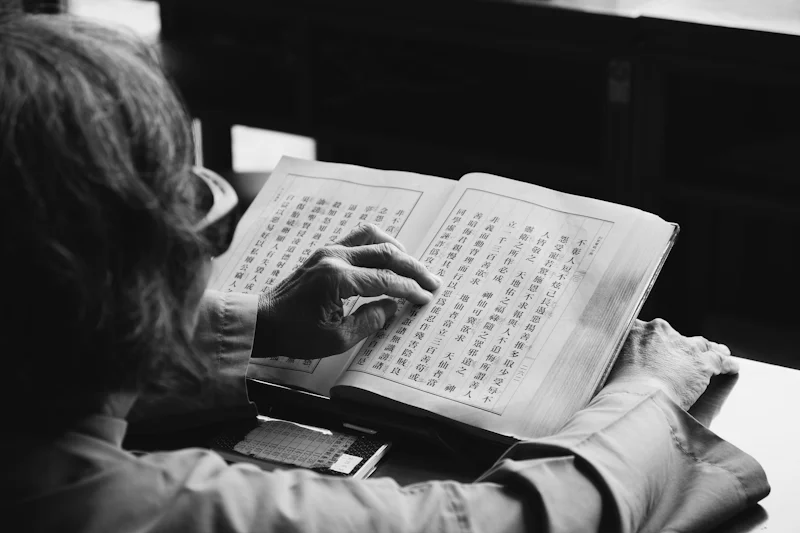
Avoid jumping straight into original Classical Chinese (Wenyanwen) if you are not fluent. Utilize bilingual annotated editions, preferably those published by reputable academic presses. These editions often include side-by-side English translations and detailed notes on historical allusions. For a digital approach, utilize the Pleco dictionary app with the added classical Chinese database, or explore the Chinese Text Project (ctext.org), which provides digitized versions of classics with cross-referenced annotations. These tools are indispensable for identifying idioms (chengyu) that draw from historical anecdotes; without knowing the original context of a chengyu, the narrative impact is frequently lost.
Embrace the Episodic Structure
Unlike the modern Western novel, which often prioritizes linear character development and a singular climax, older Chinese literature is frequently episodic. Books like 'Journey to the West' are structured in a way that reflects their origins in oral storytelling. If a narrative seems to wander or repeat motifs, consider that these works were designed for serial consumption. Patience is key; focus on the thematic consistency of each episode rather than waiting for a single narrative arc to resolve in a way that feels 'satisfying' by contemporary novelistic standards. Treat each chapter as a window into a specific facet of historical life, belief, or humor.
Navigate Cultural Allusions
Chinese literature is heavily intertextual. Poets frequently referenced earlier works to demonstrate their education and cultural alignment. When you encounter a passage that feels particularly dense or layered with imagery—especially involving seasons, plants, or moon phases—it is likely an allusion to a classic poem. Rather than skipping these, look up the reference. These allusions serve as a shorthand for emotional states. For example, the 'weeping willow' is not merely a tree; it carries centuries of literary weight regarding parting, sadness, and the transience of life.
Refining your approach to these texts involves acknowledging that they are not static historical artifacts but living legacies that continue to inform contemporary social values. By analyzing the interplay of philosophy, social hierarchy, and symbolic allusion, you transform from a passive reader into an active interpreter of Chinese history. Which classic Chinese novel or collection of poetry have you found most challenging, and what specific cultural hurdle did you face while reading it?
Quick Takeaways:
- Familiarize yourself with the core tenets of Confucianism, Taoism, and Buddhism
- Use annotated bilingual editions to capture nuanced historical and political context
- Track character relationships and hierarchy to understand social motivations and conflicts
- Expect an episodic structure rather than linear Western-style plot development
- Research the cultural weight of common symbols to decode poetic allusions
#cultureandlang #chineseliterature #studychinese
