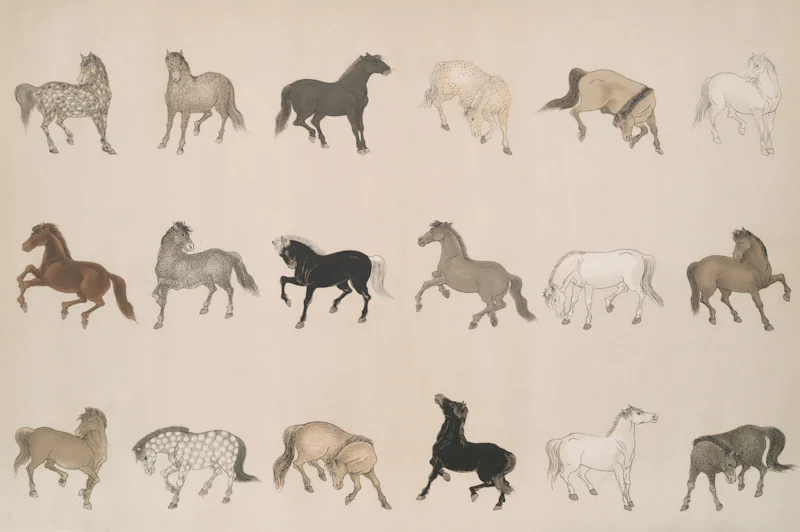
As China celebrates the Lunar Year of the Horse, cultural enthusiasts are looking beyond the zodiac to the visual symbols that have defined Chinese aesthetics for millennia. Among these, the “Ma Wen,” or horse pattern, stands as a testament to the country’s artistic resilience. In a recent dialogue, Sun Ruoxi, Executive Director of the Pattern R&D Center of the China Arts and Crafts Society, explored how this ancient motif has evolved from bronze artifacts into a global language of fashion and design.
A Legacy of Vitality and Philosophy
The horse pattern is more than a decorative element; it is a cultural anchor. Sun Ruoxi notes that while art often begins with utility, it survives through philosophy. Since the Neolithic Age, the horse has represented the “spirit of progress” and “noble character.” Unlike other motifs that may be restricted to specific materials, the horse pattern is uniquely adaptable, appearing across bronzes, ceramics, embroidery, and architecture.
This “vitality” stems from two sources: a stable core of auspicious meanings—such as success and perseverance—and an open, inclusive approach to design. By reflecting the aspirations of the people, the horse pattern has remained relevant for over thirty centuries.
The Evolution of a Visual Style
The history of the horse pattern is, in many ways, a visual history of China’s shifting social eras:
- Shang and Zhou Dynasties: Characterized by simple, powerful lines carved into jade and cast in bronze.
- Han Dynasty: Patterns became more spirited and muscular, often seen in stone reliefs depicting chariots and legendary steeds.
- Tang Dynasty: This era marked the peak of cross-cultural fusion. The “Winged Horse” (Tian Ma) appeared on silk brocades, combining traditional Chinese styles with influences from ancient Greece, Persia, and Sogdia.
- Song and Yuan Dynasties: Designs shifted toward the “literati” style—elegant, minimalist, and focused on the inner spirit of the animal rather than just its physical form.
- Ming and Qing Dynasties: Horses became guardians of the home, frequently used in architectural details like doorbeams and eaves to symbolize protection and loyalty.
The Silk Road’s Visual Ambassador
Perhaps the most intriguing aspect of the horse pattern is its role in international diplomacy. The “Winged Horse” motif serves as a perfect case study in cultural exchange. As it traveled the Silk Road, it absorbed local flavors from every region it touched, eventually becoming a “visual footnote” to the interconnectedness of the ancient world.
In early 2026, modern iterations of these patterns, such as the “Eight Steeds of the Prosperous Era,” were showcased at the “China Gift Exhibition” in Bangkok to mark 50 years of friendship between China and Thailand. These contemporary works utilize traditional silk and porcelain to communicate ancient wisdom to a modern, international audience.
The Digital Future of Tradition
To ensure these patterns do not become relics of the past, Sun’s team is building a comprehensive digital “gene bank” for traditional patterns. By using AI algorithms to analyze historical compositions and 3D printing to lower the barrier for high-quality recreations, technology is acting as an enabler for tradition.
“The goal is to move from ‘being borrowed’ by global brands to ‘proactive sharing’ of our own narratives,” Sun explains. By digitizing thousands of years of horse motifs, China is providing a creative engine for designers worldwide to integrate these symbols into digital art, VR spaces, and modern fashion.
Ultimately, the horse pattern remains a universal code. Whether it is a Han Dynasty stone carving or a digital rendering in 2026, the image of the galloping horse continues to evoke a shared human pursuit of freedom, harmony, and unyielding progress.
#ChineseCulture #YearOfTheHorse2026 #TraditionalDesign #SilkRoadArt #HeritageInnovation
