The Year of the Horse has brought with it a remarkable archaeological discovery that sheds new light on the ancient Silk Road. Recent excavations in Turpan, Xinjiang, have unveiled a stunning Tang Dynasty painted coffin featuring two “Heavenly Horses” in vibrant blue and green. These artifacts serve as a vivid testament to the deep cultural synthesis between China’s Central Plains and the Western Regions (Xiyu).
The "Heavenly Horses" of Turpan
The discovery at the Badamu cemetery is unique for its blend of regional styles. According to Mahemuti Abuduwaili, Director of the Institute of History at the Xinjiang Academy of Social Sciences, these celestial steeds were painted using local mineral pigments—azurite for blue and malachite for green—yet the brushwork and shading techniques clearly reflect the artistic traditions of the Tang Dynasty court.
The winged figures mirror the visual language of the flying deities found in Dunhuang, while the spotted patterns on the horses were historically regarded in the Central Plains as a sign of “Dragon lineage.” This hybrid imagery proves that these were not just local artifacts, but the result of a sophisticated cultural exchange that flourished over a millennium ago.
A Bridge Between East and West
Horses have always occupied a central place in human civilization, though their symbolism differs across cultures:
- In the East: The horse represents loyalty, bravery, and the “Dragon-Horse Spirit”—a metaphor for the nation’s tireless pursuit of progress and a gentleman’s integrity.
- In the West: The horse is often a symbol of freedom, heroic individual achievement, and the chivalric honor of the nobility.
Despite these differences, the horse remains a universal symbol of power and reliability. In Xinjiang, this shared appreciation facilitated a "Two-Way Street" of culture. The Han Dynasty’s quest for the legendary “Heavenly Horses” of the Ili Valley led to the opening of the Silk Road, which in turn brought advanced breeding and equestrian technologies back to the region.
From Ancient Trade to Modern Festivals
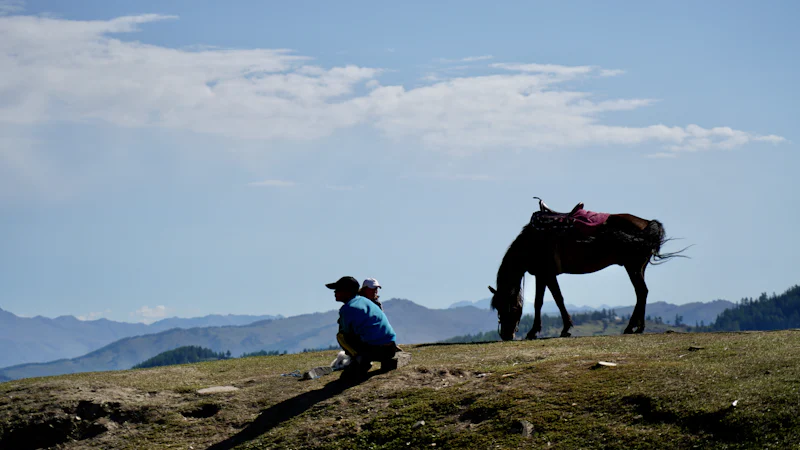
The exchange reached its zenith during the Tang Dynasty through the “Silk-Horse Trade” and the “Tea-Horse Trade.” Western steeds were not only vital for the military but also became the stars of polo matches and court performances. Today, this legacy lives on in Zhaosu County, known as the “Home of the Heavenly Horse.”
The contemporary Zhaosu International Horse Art Festival continues to celebrate this heritage, drawing thousands of spectators to witness the speed and grace of the Ili horse. From the ancient painted coffins of Turpan to the high-speed races of today, the story of Xinjiang’s horse culture remains a vital chapter in the ongoing narrative of cultural diversity and shared heritage along the Silk Road.
#XinjiangCulture #SilkRoadHistory #AncientArchaeology #HeavenlyHorses #CulturalHeritage
