Yes, you can absolutely take a USB flash drive on a flight in China. It is a standard and very common electronic item that security personnel see thousands of times a day. Concerns about bringing storage devices into or out of the country are understandable given China’s reputation for thorough security, but for the purposes of an airport check, a simple USB drive is treated no differently than a set of headphones or a digital camera. It can be placed in either your carry-on or checked luggage without any issue.
The General Rule for Personal Electronics
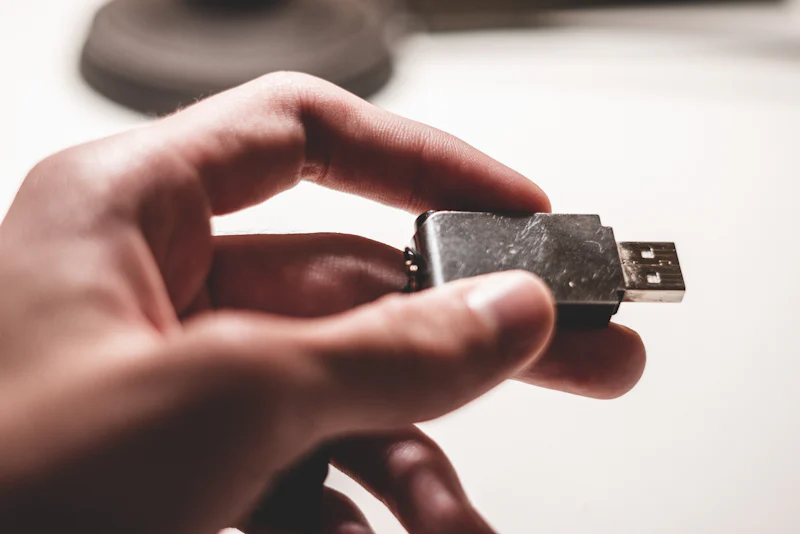
Chinese airport security operates under rules set by the Civil Aviation Administration of China (CAAC), or 中国民用航空局. Their primary concern regarding electronics is not the device itself, but its power source—specifically, lithium-ion batteries. This is why items like USB flash drives, external hard drives without internal batteries, and other small peripherals are rarely an issue. They are considered inert electronics. The focus of the security check (安检, ānjiǎn) is on potential fire hazards and prohibited items, not the function or data content of your devices. So, while the process can feel intimidating, remember their goal is aviation safety, and your flash drive doesn't pose a threat in that context.
Carry-On vs. Checked Luggage: What Goes Where
While a USB flash drive or external hard drive is permitted in both carry-on and checked baggage, the universal advice is to always keep them in your carry-on. This isn’t a security rule but a practical one to prevent theft, loss, or damage by baggage handlers. The most critical distinction applies to power banks (充电宝, chōngdiànbǎo). Due to the fire risk of their lithium-ion batteries, power banks are strictly forbidden in checked luggage. They must be carried in your cabin baggage.
The CAAC has specific rules for power banks:
- Their capacity must be under 100Wh. No airline approval is needed.
- For capacities between 100Wh and 160Wh, you must get approval from the airline prior to your flight.
- Anything over 160Wh is completely prohibited.
Crucially, the capacity marking must be clearly printed and legible on the device. If security staff cannot read the rating, they will confiscate it on the spot, no exceptions. This is one of the most common reasons travelers lose their power banks at Chinese airports.

Navigating the Security Checkpoint
When you reach the security line, the procedure is straightforward. You will need to remove large electronic items like laptops, tablets, and sometimes large external hard drives from your bag and place them in a separate tray for the X-ray scanner. A small USB flash drive can typically remain inside your bag, perhaps in a smaller pouch with your cables, to keep it from getting lost. If a security officer does ask to inspect an item, it’s a routine part of the process. They are generally looking to verify that the item is what it appears to be. It is exceedingly rare for them to ask you to plug in a device or inspect its contents. Their training is focused on identifying physical threats.
Common Concerns and What to Avoid
Many foreigners worry if security will scan the data on their drives. The simple answer is no. The airport security screening is a physical check for dangerous goods. Inspecting digital files is not part of their procedure or capability at the checkpoint. While China has extensive digital surveillance, this is separate from the 安检 (ānjiǎn) process you experience at the airport gate.
That said, it is always wise to be mindful of the data you are carrying. If you are carrying a very large quantity of drives—say, a box of 50—it might attract questions about commercial importation rather than personal use. But for any normal traveler with a few personal or work-related drives, there is no cause for concern.
Ultimately, carrying a USB drive is a non-issue, but being unprepared with your power bank can cause real delays.
Have you ever had an unusual electronic item questioned or confiscated at a Chinese airport security check?
Quick Takeaways:
- USB drives and external hard drives are allowed in both carry-on and checked bags.
- All power banks (充电宝) must be in your carry-on and have their capacity clearly marked.
- Laptops, tablets, and large electronics must be removed from your bag for X-ray screening.
- Airport security focuses on physical threats and battery safety, not your personal data.
#chinatravel #airportsecurity #carryonrules