Being an “overseas Chinese” in China means navigating a complex social space where your ethnic appearance creates local expectations that your foreign passport and cultural upbringing may not match. It’s a constant experience of being seen as both an insider and an outsider simultaneously. The core challenge isn’t about legal status, but about managing the subtle, and often unspoken, assumptions people make about your language ability, cultural knowledge, and personal identity. You exist in a unique third space, not quite a 老外 (lǎowài), but not fully local either.
The Key Terms: Huaqiao vs. Huayi
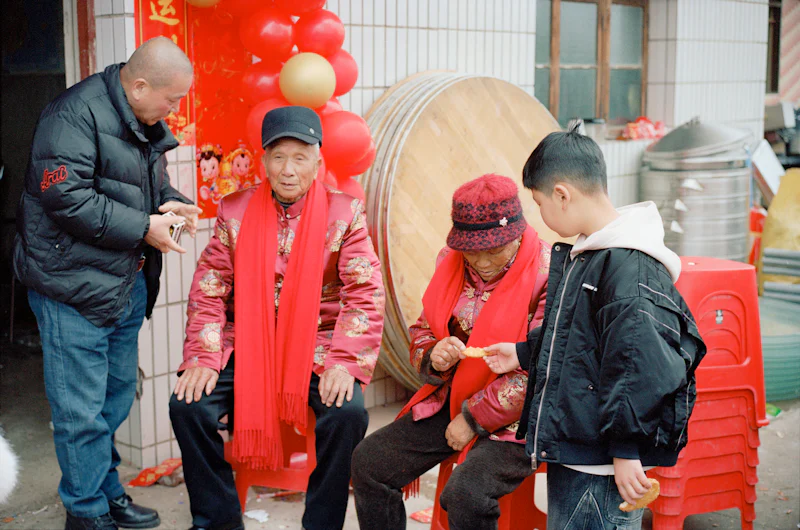
Understanding the official language is the first step. In China, there are two distinct terms that are often used interchangeably in casual conversation but have very different legal meanings. Huaqiao (华侨) refers to Chinese citizens who reside overseas. They hold a People's Republic of China passport and are legally Chinese nationals. In contrast, huayi (华裔) refers to foreign citizens of Chinese descent. If you were born in Canada to Chinese parents and hold a Canadian passport, you are huayi.
This distinction is crucial. As a huayi, you are legally a foreigner in China. You need a visa, must register your residence with the local police, and cannot use the Chinese ID card queues for things like train travel or hotel check-ins. While a local might informally call you huáqiáo, the government and official systems will always categorize you based on your passport.
Navigating Social Expectations
One of the most immediate experiences for heritage Chinese is the “language paradox.” Locals will almost always assume you speak fluent Mandarin. If you do, your accent and vocabulary may be closely scrutinized and compared to a native standard. If you don’t speak Mandarin or speak it with a heavy foreign accent, it can lead to genuine surprise or even good-natured teasing. This puts you in a different category from other foreigners, who are not typically expected to speak Chinese at all.
Beyond language, there’s an expectation of cultural fluency. You might be expected to understand complex social norms, holiday customs, and workplace dynamics, often referred to as 潜规则 (qián guī zé), or “unwritten rules.” This can create pressure to know things that were simply not part of your upbringing, from how to properly accept a business card with two hands to navigating the nuances of giving and receiving gifts.
The “ABC” Identity in China
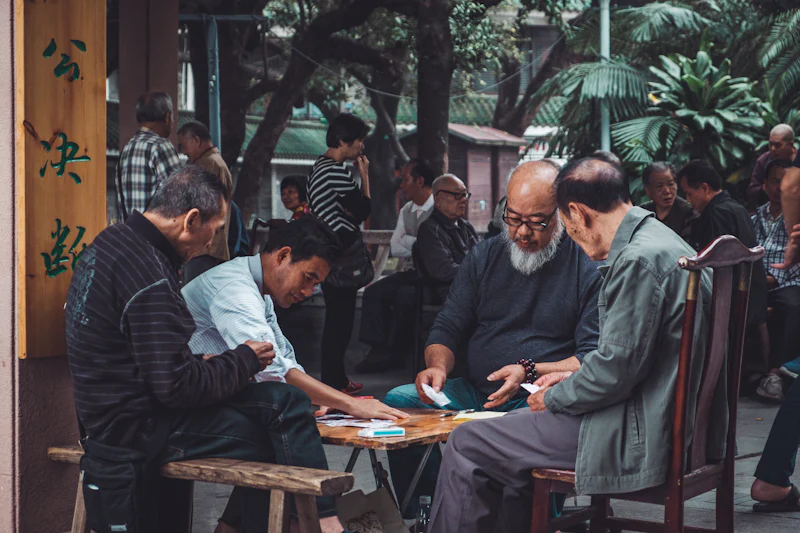
Shorthand terms like ABC (American-Born Chinese), CBC (Canadian-Born Chinese), or BBC (British-Born Chinese) are widely understood among both the expat and local communities. This identity often means feeling caught between two worlds. You might find that you don't fully fit in with the expat crowd, whose experiences can be vastly different, nor do you completely blend in with local Chinese friends, who share a different collective memory and cultural context.
This “in-between” status can manifest in small, daily interactions. For example, a street vendor might be less willing to bargain with you, assuming you are a local trying to get a better deal, whereas they might offer a “foreigner price” to someone who looks non-Chinese. Conversely, your heritage can be a powerful tool for building rapport and guanxi (关系), or relationships, as it provides an immediate, shared connection.
Practical Realities and Advantages
Despite the social complexities, being a heritage Chinese person in China carries significant practical advantages, particularly in the professional world. Many multinational and even local companies actively seek out huayi employees. They value your ability to act as a cultural and linguistic bridge, understanding both Western business practices and the intricacies of the Chinese market. You can translate not just language, but also context—a skill that is in high demand.
Your journey in China as a huayi is ultimately one of personal discovery. It involves reconciling your own sense of identity with the perceptions of those around you, leveraging your unique background as a strength while learning to navigate the expectations that come with it.
The experience of being a heritage Chinese in China is a continuous negotiation of identity, shaped by the gap between how you are seen and who you are.
For other huayi in China, what social situation that highlighted your “in-between” status surprised you the most when you first arrived?
Quick Takeaways:
- Huaqiao are Chinese citizens abroad; huayi are foreign citizens of Chinese descent.
- Be prepared for locals to assume you speak fluent, unaccented Mandarin.
- Legally, your foreign passport makes you a foreigner requiring a visa and permit.
- Your bicultural background is often a significant professional advantage in the workplace.
#overseaschinese #huayi #chinacommunity