The China 144-hour visa-free transit policy allows eligible travelers to stay in specific regions of mainland China for up to six days without a visa, but only if they are in transit to a third country or region. This is the single most important rule: your journey must follow an A → China → B pattern, where Country A and Country B are different. For example, a flight from New York to Beijing and then onward to Tokyo is eligible. A round-trip flight from New York to Beijing and back to New York is not eligible.
The “Third Country” Rule Explained
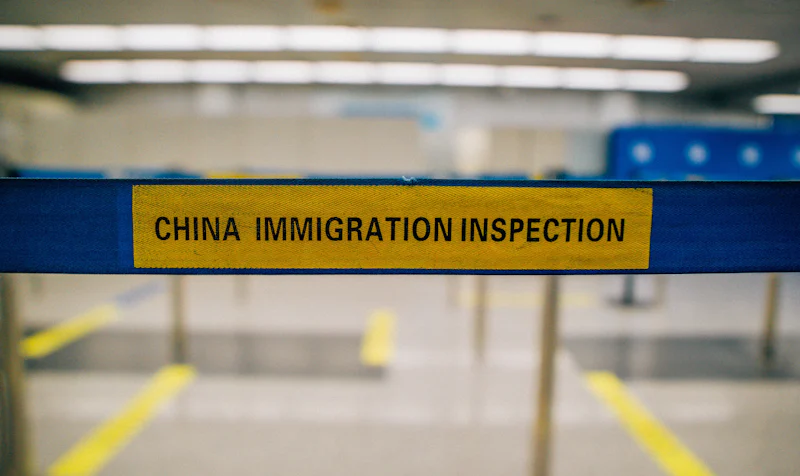
Understanding this rule is crucial to avoid being denied entry. The policy is designed for genuine transit passengers, not for short tourist trips from your home country. Your itinerary must clearly show that China is a stopover on your way to another destination. This “third country” can also be a Special Administrative Region of China, like Hong Kong or Macau.
Here are some valid examples:
- Canada → Shanghai → Australia
- United Kingdom → Beijing → Hong Kong
- Thailand → Guangzhou → United States
An invalid itinerary would be:
- USA → Beijing → USA (This is a round trip, not a transit)
- USA → Beijing → Guam (Guam is a US territory, so it’s not considered a “third country” in this context)
The 144-hour clock starts at 00:01 on the day following your arrival, giving you six full days for exploration.
Eligible Ports and Permitted Regions
This policy is not nationwide. It applies only to specific ports of entry which are grouped into regions. A key benefit is that you can often enter through one port and exit through another within the same designated region. You are not allowed to travel outside this designated area.
Major participating regions include:
- Beijing-Tianjin-Hebei Region: You can enter/exit via airports like Beijing Capital (PEK), Beijing Daxing (PKX), Tianjin Binhai (TSN), and Shijiazhuang Zhengding (SJW). During your layover, you are permitted to travel anywhere within Beijing, Tianjin, and Hebei Province.
- Shanghai-Jiangsu-Zhejiang Region: Enter/exit through major airports like Shanghai Pudong (PVG), Shanghai Hongqiao (SHA), Nanjing Lukou (NKG), or Hangzhou Xiaoshan (HGH). You can travel freely throughout Shanghai municipality and the provinces of Jiangsu and Zhejiang.
- Guangdong Province: This includes entry/exit via Guangzhou Baiyun (CAN), Shenzhen Bao'an (SZX), and Jieyang Chaoshan (SWA). Your activities are restricted to Guangdong Province.
Always check the latest list of eligible ports and nationalities on China’s National Immigration Administration website before booking, as the list can be updated.
Required Documents at Immigration
When you check in for your flight to China, the airline staff will verify your eligibility for the transit without visa (TWOV) policy. If your documents aren't in order, you won’t be allowed to board. Upon arrival in China, you’ll go to a dedicated counter for 144-hour transit applications.
Be prepared with:
- A passport from one of the 53 eligible countries, with at least three months of remaining validity.
- A confirmed onward air ticket to a third country or region with a departure date and time within 144 hours of your arrival.
- A completed Arrival/Departure Card which you’ll get on the plane or at the immigration hall.
Having a printout of your onward flight confirmation is highly recommended. While digital versions are often accepted, a physical copy can speed things up.
What You Can Do During Your Stay
Once your transit stay permit is approved and stamped in your passport, you are free to leave the airport and explore. The primary restriction is geographical—you must stay within the permitted administrative region. For a Beijing layover visa, this means you can visit the Great Wall (in Hebei or Beijing), explore Tianjin's colonial architecture, and see all of Beijing's famous sights. However, you cannot take a flight or train to another region, such as Xi'an or Chengdu.
If you are staying in a hotel, they will register your stay with the local Public Security Bureau (公安局 gōng'ānjú) automatically. If you stay with friends or in a private residence, you are legally required to register in person at the nearest police station within 24 hours of arrival.
The real benefit of the 144-hour policy is turning a long layover into a bonus mini-vacation without the cost and hassle of applying for a full tourist visa in advance. Proper planning is everything; ensure your documents and itinerary strictly align with the transit rules.
Which city did you use for a 144-hour transit, and what was one highlight of your short trip?
Quick Takeaways:
- Your journey must be Country A → China → Country B; round trips are not eligible.
- Travel is restricted to the specific city/province region you enter, like the greater Beijing area.
- You must have a passport from an eligible country and a confirmed onward flight ticket.
- The 144-hour countdown begins the day after you arrive, giving you six full days.
#chinatransit #visafree #beijinglayover