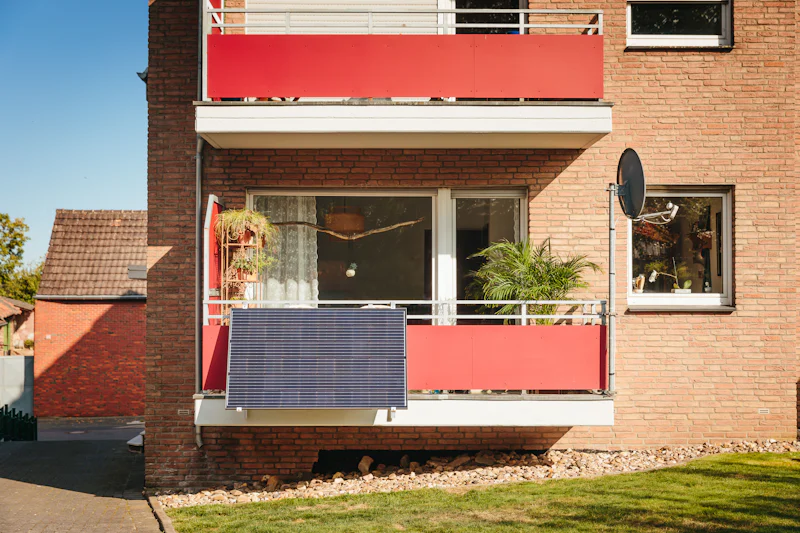
For years, the image of solar power in China was defined by vast "blue oceans" of panels stretching across remote deserts. However, by 2026, the trend has shifted toward the domestic and the hyper-local. A new wave of "balcony solar" systems is currently transforming high-rise apartments into miniature power plants, turning ordinary residents into "prosumers"—people who both consume and produce their own electricity.
The Rise of "Plug-and-Play" Energy
Balcony solar systems are essentially lightweight, portable photovoltaic kits designed to be hung on apartment railings and plugged directly into a standard wall outlet. While this trend initially exploded in Europe due to energy shortages, 2025 and 2026 have seen Chinese tech firms aggressively entering the market with sleek, user-friendly solutions.
Unlike industrial solar farms, these consumer-grade products prioritize:
- Ease of Installation: No professional engineers or complex permits are required.
- Aesthetic Integration: Panels are designed to complement modern urban architecture.
- Smart Monitoring: Real-time data tracking via mobile apps allows users to see exactly how much energy they are harvesting for their appliances.
Why China, Why Now?
Critics often point out that China’s residential electricity prices are relatively low, leading to questions about the "return on investment" for home solar. However, the market is being driven by two distinct factors:
- SME Demand: Small businesses and shops are facing rising commercial electricity rates and new "peak-valley" pricing structures. For a small shop owner, a balcony system can significantly offset costs during expensive peak hours.
- The "Roof Gap": Most urban Chinese residents live in high-rises where roof ownership is collective and complex. Balcony solar bypasses these legal hurdles, giving apartment dwellers their first real opportunity to engage in the green energy transition.
From Investment to Lifestyle
Industry experts suggest that the real value of balcony solar isn't just in the kilowatt-hours produced, but in its role as a "consumer electronic" rather than a piece of infrastructure. If only 20% of urban households in China installed a modest 800-watt system, the total capacity would exceed 100 million kilowatts.
More importantly, these devices serve as a form of "energy enlightenment." When a family can see their refrigerator running on power they harvested themselves, it fosters a deep-seated low-carbon consciousness. It moves renewable energy from an abstract concept in a news report to a tangible part of the morning routine.
Future Outlook
As the efficiency of micro-inverters improves and prices continue to drop, the "small and beautiful" logic of balcony solar is proving that the energy revolution doesn't always need to happen on a grand scale. In the concrete jungles of Shanghai, Beijing, and Shenzhen, the future of energy is increasingly found hanging right outside the window.
#ChinaTech #GreenLiving #UrbanInnovation #BalconySolar #Sustainability2026
