Telling if jade is real involves simple physical tests you can do on the spot. Authentic jade feels uniquely cold, dense, and smooth to the touch, and it produces a high-pitched, ringing sound when lightly tapped. While these quick checks can help you weed out obvious fakes made of glass or plastic, determining its actual monetary value is far more complex. The worth of genuine jade depends almost entirely on its quality, specifically its color, translucency, and texture, which requires a more experienced eye to judge accurately.
The Two Types of True Jade
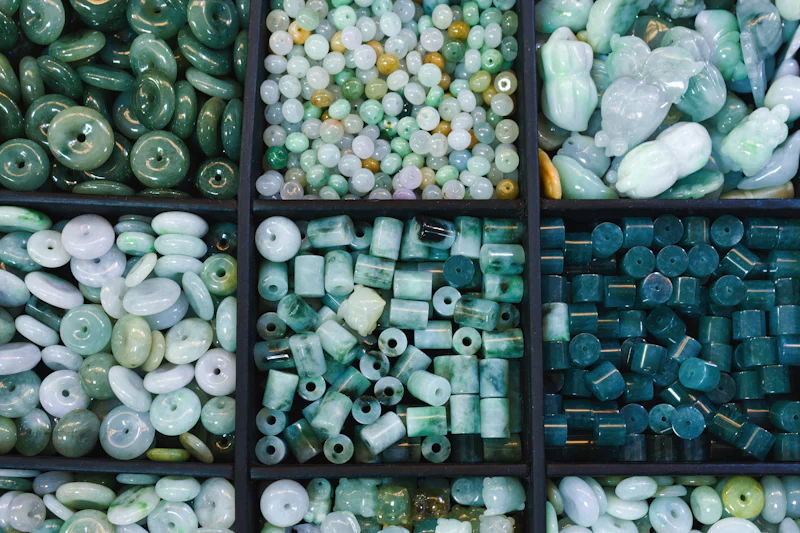
First, it’s crucial to understand that “jade” actually refers to two different minerals: Nephrite and Jadeite. Nephrite, or 软玉 (ruǎnyù), literally “soft jade,” is the traditional stone that has been carved in China for thousands of years. It’s known for its creamy, smooth texture and comes in various colors, most famously a creamy white known as “mutton fat” jade (羊脂玉, yángzhī yù). Jadeite, or 硬玉 (yìngyù), meaning “hard jade,” is harder, denser, and generally more valuable. It’s prized for its vibrant, intense colors, especially the brilliant emerald green known as “Imperial Green” (帝王绿, dìwáng lǜ), which can command astronomical prices.
Simple On-the-Spot Tests
When browsing markets, you can use a few quick methods to perform a fake jade test. These won't certify quality, but they can help you avoid buying glass or plastic.
The Touch Test: Real jade has high thermal conductivity, meaning it feels cold and heavy in your hand. It should remain cool for a while before slowly warming to your body temperature. A plastic fake will feel light and warm up almost instantly. Treated glass may feel cool initially but often lacks the dense, substantial weight of real jade.
The Sound Test: This is best for bangles. Gently tap the piece with another piece of jade or a metal object. Real jade produces a clear, high-pitched, and resonant chime that lingers for a second or two. A fake, or a heavily flawed piece, will produce a dull, low-pitched “clink” with no resonance.
The Scratch Test: Jadeite is extremely hard (6.5 to 7 on the Mohs scale), harder than steel. You can scratch a steel knife blade with a piece of real jadeite. Do not attempt this in a shop, as it can damage the item and is considered rude. It’s more of a confirmation for a piece you already own. Nephrite is softer (6.0 to 6.5) but is still resistant to scratching from a pocketknife.
What Determines Jade's Value
Beyond authenticity, three factors determine a piece's price:
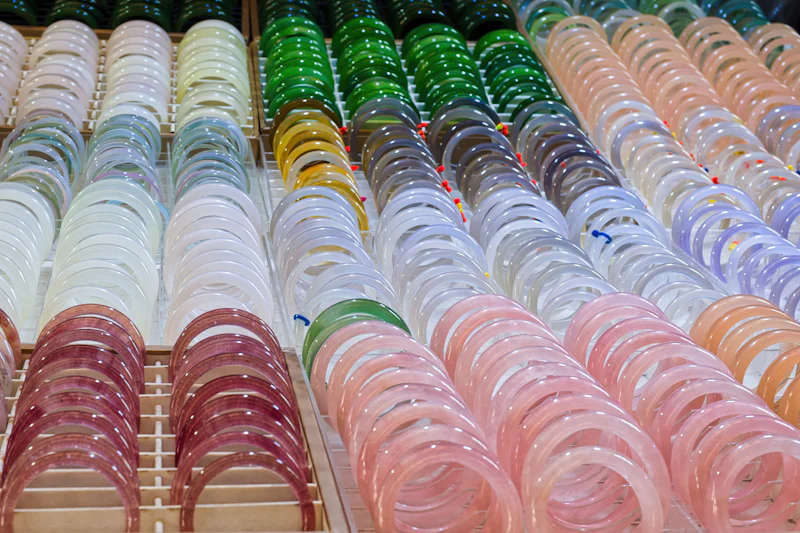
- Color: This is the most important factor. For jadeite, the more intense and uniform the green, the better. For nephrite, the purest “mutton fat” white is the most sought-after. Uneven, spotty, or dull colors dramatically lower the value.
- Translucency: High-quality jade has a beautiful translucency, appearing to glow from within. Opaque, chalky-looking jade is of much lower quality. The best jadeite is often described as having a “glassy” or “icy” texture.
- Clarity & Texture: The ideal piece has a fine, smooth grain with no internal fractures, dark spots, or cotton-like inclusions. Cracks, even minor ones, can slash the value of a piece by over 70%.
Common Scams and Buying Tips
Be aware of treated jade. Grade B jade is genuine jade that has been bleached with acid to remove impurities and then injected with a polymer resin to improve its translucency. Grade C jade has been dyed to enhance its color. Both have virtually no resale value. For any significant purchase (over 1,000 RMB), insist on a certificate from a reputable gemological institute. Finally, avoid tourist traps where prices are inflated and authenticity is questionable. Established department stores or specialty jade retailers offer more security, though at higher prices.
Ultimately, the simplest tests can save you from buying plastic, but true valuation lies in the subtle qualities of the stone itself.
What are some of the most unbelievable “jade” fakes you've come across in your travels through China?
Quick Takeaways:
- Authentic jade feels cold, heavy, and makes a high-pitched sound when tapped.
- Jadeite is harder and usually more valuable than the traditional Nephrite.
- The best jade has intense, even color and high translucency with no cracks.
- For expensive pieces, always ask for a gemological certificate to avoid treated fakes.
#jade #chineseculture #shoppinginchina