Choosing a good Chinese name as a foreigner means prioritizing cultural meaning and sound over a simple phonetic translation of your English name. The most common mistake is creating a name that sounds like your own but uses characters that are awkward, meaningless, or even have negative connotations. Instead of just sounding similar, a great Chinese name feels authentic, reflects a positive personal quality, and is easy for native speakers to say and remember. Your goal is connection, not just translation.
The Pitfall of Phonetic Translation
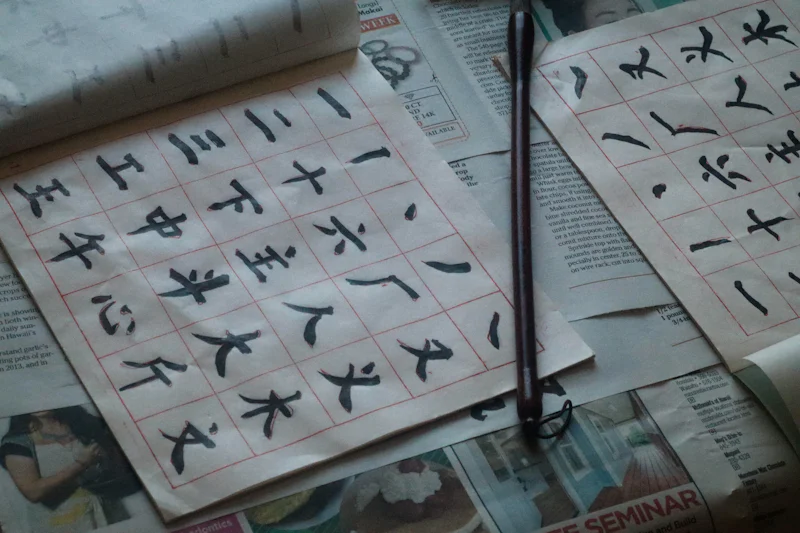
Directly translating the sounds of your name is tempting, but it’s often a recipe for disaster. Chinese is a tonal language where many characters share the same phonetic sound (pinyin) but have vastly different meanings. For example, the name “Debbie” could be transliterated as 呆逼 (dāi bī), which unfortunately sounds like a very vulgar insult. Online tools and any generic Chinese name generator are notorious for creating these kinds of awkward names because they operate on sound alone, ignoring cultural context and connotation. A name that looks good on paper might be a social blunder when spoken aloud.
Core Elements of a Great Chinese Name
A well-chosen name harmonizes three key elements: meaning, sound, and structure. Most Chinese names consist of a one-character surname, or 姓 (xìng), followed by a one or two-character given name, or 名 (míng).
First, meaning is paramount. Characters are chosen for their auspicious or admirable qualities. For example, meaningful Chinese characters often relate to nature, wisdom, strength, or beauty. A character like 杰 (jié) means “heroic,” 慧 (huì) means “wise,” and 安 (ān) means “peaceful.” Think about a quality you admire or want to embody and find characters that represent it. Using a dictionary app like Pleco can help you explore character meanings in depth.
Second, sound and flow matter. The tones of the characters should create a pleasant rhythm. A name with clashing or repetitive tones can sound monotonous or awkward. For instance, a name where all characters are the fourth (falling) tone might sound angry or harsh. While you don't need to be a linguistics expert, saying your potential name out loud can give you a feel for its musicality.
Third, the structure should feel natural. The easiest path is to adopt one of the hundred most common Chinese surnames, such as 李 (Lǐ), 王 (Wáng), or 陈 (Chén). This immediately makes your name feel familiar. For your given name (míng), two characters are most common today, offering more room for creative and meaningful combinations.
A Practical Approach to Choosing Your Name
Follow these steps to find a name that fits you.
Select a Surname: Start by choosing a common Chinese surname (姓). This is the simplest way to ground your name in a Chinese context. Alternatively, you could pick a character that sounds somewhat similar to the first syllable of your own family name, but be sure to check its meaning carefully.
Brainstorm Given Name Characters: Think about your personality, aspirations, or even your profession. Are you creative? Perhaps a character like 艺 (yì) for “art.” Looking up lists of common Chinese names for boys and girls can show you which characters are popular and reveal their typical associations.
Combine and Test: Create a shortlist of 3–5 potential full names. For example, if you chose the surname 高 (Gāo) and value intelligence, you might consider 高明哲 (Gāo Míngzhé), combining “bright” and “wise.”
Get Native Speaker Feedback: This is the most important step. Share your shortlist with several Chinese friends, colleagues, or a language teacher. Ask them: Does it sound natural? Does it have any strange or outdated connotations? Is it easy to pronounce and remember? They will catch nuances that no app or website ever could. They might also suggest better alternatives you hadn't considered.
Ultimately, a well-chosen Chinese name is a bridge to deeper cultural connection, balancing personal significance with local sensibility.
What meaningful characters did you consider for your name, and what was the story behind your final choice?
Quick Takeaways:
- Avoid direct phonetic translations; they often create awkward or silly names.
- Select characters based on positive meanings, such as wisdom 智 (zhì) or grace 雅 (yǎ).
- Always get feedback from multiple native Chinese speakers before finalizing your name.
- Start with a common surname like 李 (Lǐ) or 王 (Wáng) for cultural familiarity.
#chinesename #learnchinese #chinaculture
