{
"title": "How does China's 144-hour transit visa free policy work?",
"tagName": "Visa & Legal",
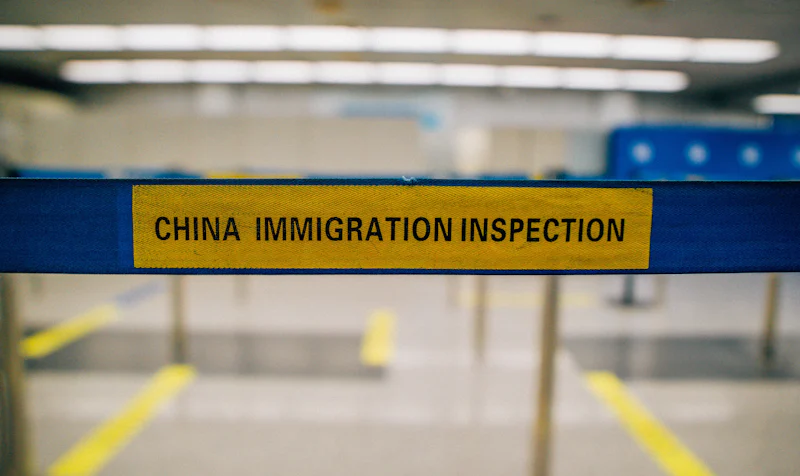
"post": "The China 144-hour transit visa policy allows citizens from 54 specific countries to enter and stay within a designated region of China for up to six days without a visa. Crucially, this is a transit policy, not a tourist visa. This means you must be traveling from Country A, through China (Country B), to a final third destination (Country C). A simple round trip, like New York to Shanghai and back to New York, does not qualify. Understanding this core principle is the most important step to using the policy correctly.\n\n## The Core "A -> B -> C" Transit Rule\n\nThe entire policy hinges on one non-negotiable rule: your point of origin and your final destination must be different countries or regions. China must be the transit stop in the middle. For example, a flight path like Tokyo (A) -> Shanghai (B) -> London (C) is a valid use of the policy. However, a route like Tokyo (A) -> Shanghai (B) -> Tokyo (A) is considered a round trip and is ineligible. This also applies to different cities within the same country; for instance, Los Angeles -> Beijing -> San Francisco is not a valid transit route. Hong Kong, Macau, and Taiwan are considered separate regions for this policy, so a route like USA -> Beijing -> Hong Kong is perfectly valid.\n\n## Eligible Nationalities and Ports\n\nCitizens from 54 countries are eligible for the 144-hour Transit Without Visa (TWOV) policy. These include the United States, Canada, the United Kingdom, Australia, New Zealand, Japan, South Korea, Singapore, and all Schengen Area countries. You must hold a passport from one of these nations.\n\nThe policy is only available at specific ports of entry, known as 口岸 (kǒu'àn), which are grouped into administrative regions. You must enter, stay within, and exit from the same designated region. Major regions include:\n\n* Beijing-Tianjin-Hebei Region: You can enter/exit through Beijing Capital Airport (PEK), Beijing Daxing Airport (PKX), or Tianjin Binhai Airport (TSN), among others, and travel freely between these three municipalities.\n* Shanghai-Jiangsu-Zhejiang Region: Enter/exit through Shanghai Pudong (PVG), Shanghai Hongqiao (SHA), Nanjing Lukou (NKG), or Hangzhou Xiaoshan (HGH) airports. You can travel within this entire populous region.\n* Guangdong Province: Enter/exit through Guangzhou Baiyun (CAN), Shenzhen Bao'an (SZX), or Jieyang Chaoshan (SWA) airports and explore the entire province.\n\nAlways verify that your specific entry and exit airports are on the official list for the region you plan to visit.\n\n## The Arrival Process and Counting the Hours\n\nUpon landing, do not follow the main crowd to immigration. Look for the dedicated counter for 144-Hour Transit Visa Exemption. You will need to present three things: your passport (with at least three months of validity), your filled-out Arrival/Departure Card, and a printed copy of your confirmed onward flight ticket to a third country or region within 144 hours of your scheduled arrival. A flight confirmation on your phone may not be accepted.\n\nOne of the most misunderstood aspects is how the 144 hours are calculated. The clock does not start when your plane lands. It begins at 00:01 on the day following your arrival. For example, if you land at 7:00 AM on May 10th, your 144 hours officially start at 12:01 AM on May 11th, giving you until 11:59 PM on May 16th to depart. This effectively gives you a little over six full days in the region.\n\n## Common Pitfalls to Avoid\n\nMany travelers are denied entry due to simple mistakes. The most common error is misunderstanding the A -> B -> C rule and booking an ineligible round trip. Another frequent issue is planning to travel outside the permitted administrative region—for example, entering through Shanghai and attempting to take a train to Beijing is not allowed under the policy. Lastly, failing to have a printed, confirmed onward ticket is a guaranteed way to be denied entry and sent back on the next available flight.\n\nThe 144-hour TWOV policy is an excellent way to see a slice of China on a long layover, provided you meticulously plan your itinerary to match its strict transit requirements.\n\nWhat has your experience been using the 144-hour TWOV, and do you have any specific port-of-entry tips that aren't widely known?\n\n---\n\nQuick Takeaways:\n* You must be transiting to a third country or region; round trips do not qualify.\n* The 144-hour clock begins at midnight on the day after your arrival.\n* A printed, confirmed onward flight ticket is mandatory for your application on arrival.\n* You can only travel within the specific administrative region of your entry port.\n\n---\n\n#chinavisa #144hourtransit #twovchina"
}