The 144-hour transit visa is a visa-free entry permit allowing citizens from 54 specific countries to stay in certain Chinese cities and regions for up to six days. The most critical requirement is that you must be in transit to a third country or region. This is not a tourist visa for a round trip. Your entire journey must follow a clear A → China → B itinerary, where country A and country B are different. Misunderstanding this single rule is the most common reason travelers are denied entry upon arrival.
Understanding Passport Eligibility
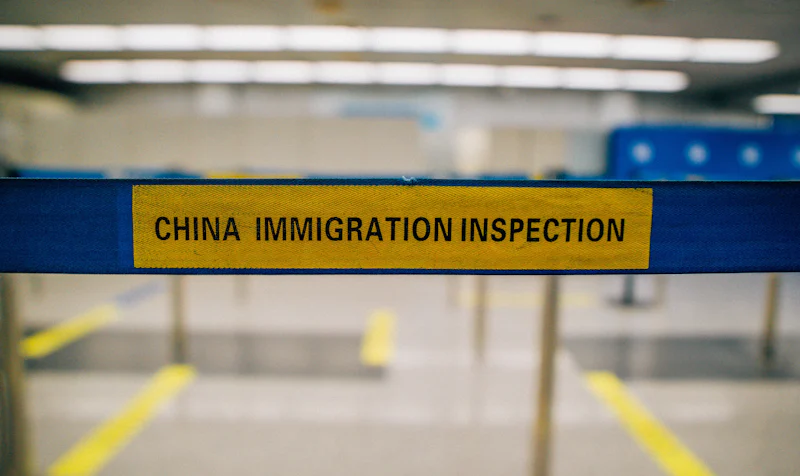
Eligibility for the 144-hour transit visa in China is determined by your passport, not your country of residence. As of late 2023, citizens from 54 countries qualify. This list includes the United States, Canada, the United Kingdom, Australia, New Zealand, Japan, South Korea, Singapore, and all countries in the European Union’s Schengen Area. Other eligible nations include Brazil, Mexico, Argentina, and the UAE. Before planning your trip, you must confirm your nationality is on the official list published by China’s National Immigration Administration, as the list can be updated. Having a valid passport with at least three months of remaining validity is a mandatory prerequisite for all applicants.
The Crucial Third-Country Rule
The single most important concept to master is the “third country” (or region) requirement. Your flight path must originate from one country (Country A), transit through China (Country B), and continue to a final destination in another country (Country C). A simple round trip will not work.
Here are some concrete examples:
- Valid Itinerary: New York (USA) → Shanghai (China) → Tokyo (Japan). This is a perfect A→B→C route.
- Invalid Itinerary: New York (USA) → Shanghai (China) → Los Angeles (USA). This is a round trip and does not qualify for transit.
An important detail many travelers miss is that Hong Kong, Macau, and Taiwan are considered separate regions for the purpose of this policy. This creates useful travel possibilities:
- Valid Itinerary: London (UK) → Beijing (China) → Hong Kong. This is accepted because Hong Kong is treated as a third region.
Your onward ticket must be for a flight departing within 144 hours of your arrival.
Approved Ports and Regions of Stay
The 144-hour visa-free entry is not available nationwide; it is restricted to specific ports of entry and designated geographical areas. Once you enter, you are generally not permitted to travel outside this approved zone.
The main regions are:
- Shanghai-Jiangsu-Zhejiang Region: You can enter through Shanghai (Pudong or Hongqiao airports), Nanjing, or Hangzhou and are permitted to travel freely between these three municipalities/provinces.
- Beijing-Tianjin-Hebei Region: Entry through Beijing (Capital or Daxing airports), Tianjin, or Shijiazhuang allows you to move within this northern metropolitan cluster.
- Guangdong Province: Entering via Guangzhou, Shenzhen, or Jieyang airports allows travel throughout the entire province.
Other major cities like Chengdu, Chongqing, Xi'an, and Xiamen also offer the 144-hour transit policy but restrict movement to their respective administrative areas. A key point of confusion is the timing: the 144-hour clock officially begins at 00:01 on the day following your arrival, giving you a bit more time than exactly six 24-hour periods.
The Application Process on Arrival
There is no pre-application needed for the 144-hour visa; you apply for it when you land in China. Upon disembarking, do not follow the crowds to the main immigration queues. Instead, look for the dedicated counter for 144-Hour Transit Visa-Free applications.
Here's what you need to present:
- Your valid passport from one of the 54 eligible countries.
- A confirmed onward ticket to a third country or region with a departure date and seat number, scheduled within 144 hours. A printout of your flight confirmation email is essential. Staff need to see clear proof of your departure.
- A completed Arrival/Departure Card, which you can find in the immigration hall.
The immigration officer will review your documents, ask about your travel plans, and, if approved, will stamp your passport with a temporary entry permit, known as a 临时入境许可 (línshí rùjìng xǔkě). The officer has the final say, so having your documents organized and your itinerary clear is non-negotiable.
The 144-hour transit visa is an excellent tool for a short stopover, but success depends entirely on following the A-to-B-to-C itinerary rule precisely. Have you used the 144-hour transit visa recently, and did you face any unexpected questions at immigration?
Quick Takeaways:
- Your itinerary must be Country A → China → a different Country C.
- Have a printed copy of your confirmed onward flight ticket ready for inspection.
- The 144-hour countdown starts at midnight on the day following your arrival.
- Hong Kong and Macau count as valid third regions for transit purposes.
- You must apply at the dedicated 144-hour transit counter, not the main queue.
#144hourvisa #chinatransit #visafree
