Telling if Chinese jade is real requires a combination of simple physical tests and understanding that true certainty, especially for valuable pieces, comes only from professional appraisal. For the average buyer navigating a market full of convincing fakes, the key is to first learn the difference between the two types of genuine jade and then use at-home tests to spot the most obvious imitations. While you can't become an expert overnight, you can learn to quickly disqualify dyed quartz, glass, and soapstone, saving you from common tourist traps.
The Two Types of “Real” Jade
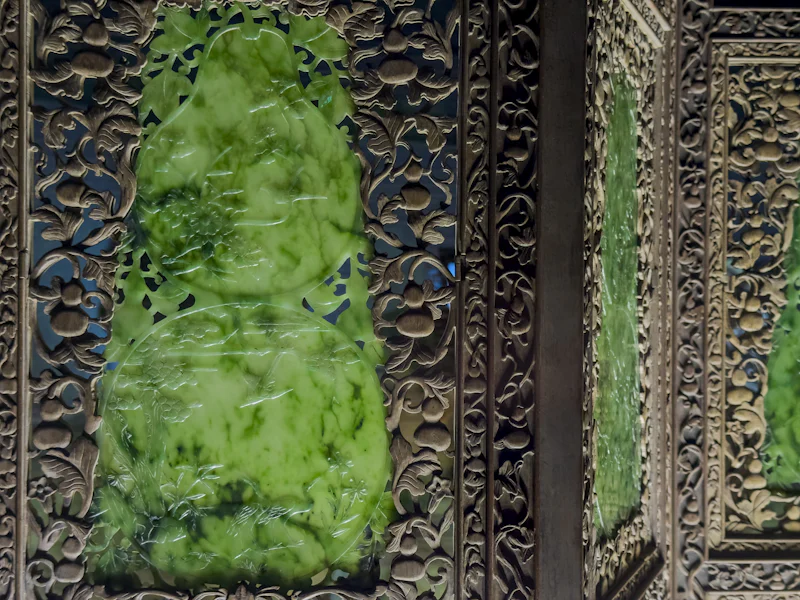
Before you can identify fakes, you need to know what constitutes real jade. The term “jade” in China primarily refers to two distinct minerals: nephrite and jadeite. Nephrite, or 软玉 (ruǎnyù), is the traditional jade of ancient China. It has an oily luster, is slightly softer (6.0–6.5 on the Mohs hardness scale), and commonly comes in muted greens, white (“mutton fat” jade), and even black. Jadeite, or 硬玉 (yìngyù), is harder (6.5–7.0 Mohs), rarer, and generally more valuable. It has a more vitreous or “glassy” luster and is famous for the vibrant, emerald-green color known as “imperial jade,” though it also appears in lavender, red, and other colors. Knowing which type you are looking at is the first step in assessing its potential value.
Simple Tests to Spot Obvious Fakes
While these tests won't fool a high-quality imitation, they can easily reveal common fakes made of softer stone, glass, or plastic. Always ask the seller’s permission before performing any test.
The Scratch Test: This is the most reliable physical test for a non-expert. Since both nephrite and jadeite are harder than steel, a piece of genuine jade should not be scratched by a steel knife blade or the tip of a pair of scissors. Gently try to scratch an inconspicuous spot. If it leaves a mark, it’s not real jade. Be aware that some fakes are made of hard stones like serpentine or quartz, which can also pass this test.
The Sound Test: Gently tap the piece with a metal coin or another piece of jade. Genuine jade has a high density and crystalline structure that produces a clear, high-pitched, and resonant chime. A fake made of glass will produce a lower-pitched clinking sound, while plastics or softer stones will sound dull and flat.
The Temperature Test: Real jade is a poor conductor of heat. It should feel cool and smooth to the touch. When you hold it in your hand, it will take a noticeable amount of time to warm up. Fakes made of plastic or glass will warm up almost instantly.
The Visual Test: Use a 10x jeweler's loupe to inspect the piece. Real jade is rarely perfect. Look for tiny, fibrous, or granular crystalline structures inside the stone. Perfectly uniform color with no internal texture, or the presence of tiny air bubbles, are strong indicators of dyed stone or glass.
What Determines Jade's Value
Value is complex, but it primarily hinges on four factors, often called the “Four Cs” of jade: color, clarity (translucency), craftsmanship, and condition. For jadeite, a deep, even, and vibrant green is the most prized. For nephrite, the pure, creamy white of “mutton fat” jade is highly sought after. The more translucent the stone—allowing light to pass through—the higher its value. Intricate, skillful carving from a master craftsman can add immense value, while chips, fractures, or internal cracks will significantly reduce it. An old piece is not automatically valuable; its quality and condition are far more important.
Finding a Reputable Appraiser in China
For any piece costing more than a souvenir budget, professional verification is essential. Do not rely on the seller's claims or their recommended “expert.” Instead, seek an independent, certified gemologist or a government-accredited institution. The most reputable is the National Gemstone Testing Center (国家珠宝玉石质量监督检验中心 Guójiā Zhūbǎo Yùshí Zhìliàng Jiāndū Jiǎnyàn Zhōngxīn), which has branches in major cities. A legitimate seller of high-value jade will always provide a certificate from such an institution. This certificate is your only true guarantee of authenticity and quality.
Ultimately, the most reliable way to avoid fake jade is to buy from reputable sources and insist on certification for expensive items. What has been your experience buying jade or other antiques in China, and how did you verify their authenticity?
Quick Takeaways:
- Real jade is two minerals: nephrite (traditional, softer) and jadeite (rarer, harder).
- Use the scratch test: genuine jade (6.0-7.0 Mohs) is harder than a steel knife.
- Real jade feels cool to the touch and makes a high-pitched chime when tapped gently.
- For any significant purchase, demand a certificate from a national testing center.
#chinesejade #antiqueschina #jadeidentification
