Qualifying for the 144-hour visa-free transit in China is entirely dependent on your flight itinerary, specifically ensuring you are traveling between three distinct regions: your origin country, mainland China, and a third destination. If your flights go from Country A to China and back to Country A, you are ineligible. You must arrive at an approved port of entry, transit through an eligible region, and depart from an approved port to a different country or region, such as Hong Kong or Macau, to successfully utilize this program without a formal visa.
Verify Your Flight Routing

The most common reason for rejection is an invalid route. The 144-hour visa-free transit China (TWOV) is designed for travelers moving through the country. Your itinerary must clearly show a connection from a departure country to China, and then from China to a third country or region (including Xianggang (Hong Kong) and Aomen (Macau)). For example, flying London to Shanghai and then Shanghai to Tokyo works, but London to Shanghai and back to London does not. Always ensure your tickets are booked as one or more confirmed segments that explicitly show the destination country change.
Confirm Your Port of Entry
Not every city in China offers this transit benefit. You must arrive at one of the designated airports or train stations authorized for this program. Major hubs like Beijing Capital International Airport (PEK), Shanghai Pudong International Airport (PVG), and Guangzhou Baiyun International Airport (CAN) are fully participating. Once you land, you are generally restricted to staying within a specific administrative region, such as the Beijing-Tianjin-Hebei area or the Yangtze River Delta. Departing from an airport outside of the authorized cluster can lead to significant immigration complications.
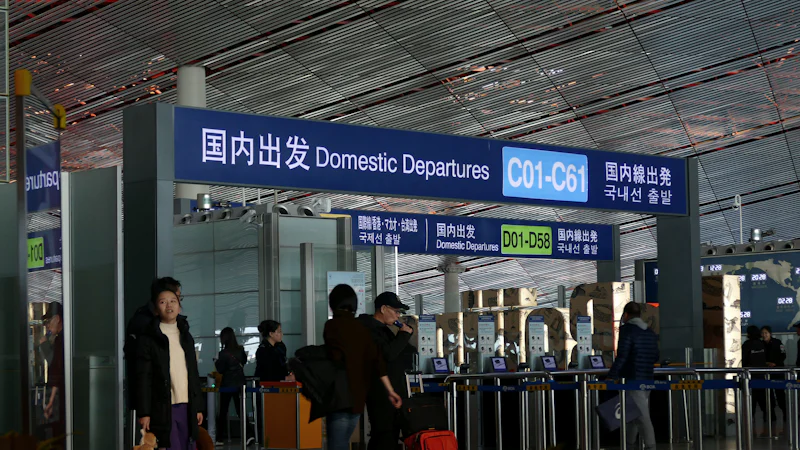
Calculate Your 144-Hour Window
The clock starts from 00:01 on the day following your arrival. If you land in Shanghai at 10:00 AM on Monday, your 144-hour period begins at midnight on Tuesday, giving you until 11:59 PM on the following Sunday. It is critical to stay within this timeframe; overstaying even by a few hours can result in fines and potential bans on future entry. Keep your boarding passes and confirmation emails organized, as immigration officers will ask to see your proof of onward travel during the entry process.
Prepare Your Entry Documentation
Upon arrival, head to the designated 144-hour transit counter before clearing standard immigration. You will need to fill out an arrival/departure card specifically for the transit visa. Ensure you have a printed copy of your flight itinerary and your passport, which must be valid for at least three months beyond your planned departure date. While digital proof is often accepted, having paper copies of your electronic tickets can speed up the process significantly when dealing with busy customs officers.
Handle Your Temporary Registration
Even if you are visa-free, you must still comply with local registration rules. If you are staying in a hotel, the front desk will handle the ju zhu deng ji (temporary residence registration) for you. If you are staying with friends or in an Airbnb, you are technically required to register your presence at the local pai chu suo (local police station) within 24 hours of arrival. Neglecting this step is a common oversight that can cause issues when exiting the country at the airport.
Ensure your third-country destination is clearly documented on your tickets to avoid being denied entry at your departure airport.
Have you ever successfully used the 144-hour transit policy, and were there any unexpected questions from the immigration officers upon arrival?
Quick Takeaways:
- Your itinerary must include three countries, with China serving as the transit middle point.
- The 144-hour clock officially begins at 00:01 on the day after your arrival.
- Stay only within the authorized municipal areas permitted by your specific port of entry.
- Print physical copies of your onward flight tickets to show immigration officers upon arrival.
#144hourvisa #chinatravel #visatips
