In traditional Chinese culture, facial hair historically served as a profound marker of status, wisdom, and maturity, representing a stark contrast to the modern preference for a clean-shaven aesthetic in professional environments. While Western grooming trends often favor rugged individualism, the historical Chinese perspective prioritized balance and harmony, viewing a well-groomed beard—often referred to as 'meiran' (美髯, beautiful beard)—as an essential accessory for scholars, officials, and deities. Understanding this evolution helps expats navigate why facial hair is sometimes viewed as unconventional in contemporary corporate China.
Imperial Symbolism and Social Status
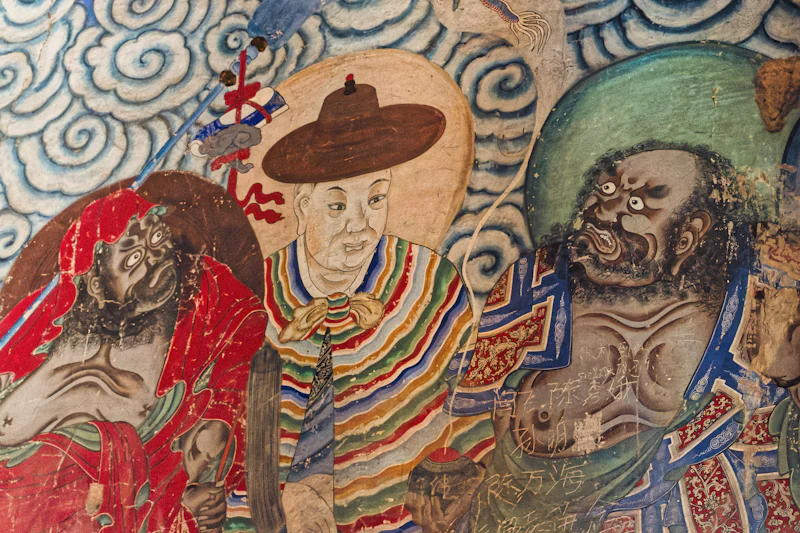
For centuries, the growth of facial hair was strictly regulated by Confucian ideals regarding filial piety and physical integrity. The concept of 'shenti fa fu' (身体发肤, body and hair received from parents) taught that one should not harm or remove any part of the body given by one's ancestors. Consequently, beards were allowed to grow naturally and were meticulously maintained by the elite. In literature and theater, specific beard styles signaled character traits: long, flowing beards represented sages or honorable warriors like Guan Yu, while unruly or sparse hair indicated villainy. These visual cues became deeply embedded in the national consciousness, establishing facial hair as an outward projection of internal character.
The Shift to Modern Clean-Shaven Norms
During the early 20th century, China underwent a period of rapid modernization characterized by the 'New Culture Movement.' Intellectuals at the time viewed traditional customs as obstacles to national progress. Western-influenced grooming habits, which prioritized efficiency and hygiene, gained traction as a symbol of modernity and professional discipline. By the mid-20th century, the clean-shaven look became the standard, partially reinforced by the industrial workforce requirement for safety and uniformity. Today, this standard remains largely dominant in formal business settings, where a smooth face is interpreted as a sign of self-discipline, hygiene, and respect for one's colleagues.
Grooming Habits in Contemporary China
While the clean-shaven aesthetic prevails, grooming culture in urban hubs like Shanghai or Shenzhen is shifting. Younger generations increasingly experiment with grooming, yet the workplace remains conservative. If you are preparing for a job interview, it is often safer to be clean-shaven, as HR managers may subconsciously associate facial hair with a lack of attention to professional detail. If you choose to maintain facial hair, ensure it is sharply defined. Modern grooming tools are readily available on platforms like 京东 (Jingdong), where electric trimmers with multiple guard settings are the standard for maintaining a precise, intentional look that separates 'unprofessional' from 'deliberately styled.'
Navigating Cultural Perceptions
It is important to recognize that perception depends heavily on the industry. Tech firms and creative agencies are generally more lenient compared to traditional banking or state-owned enterprises. When working with older Chinese partners, keep in mind that a beard might still draw curiosity or informal comments regarding your personal maturity. Maintaining a clean silhouette with a high-quality razor is a simple way to avoid cultural friction while still expressing your personal style. Focus on grooming rather than growth to ensure your appearance remains interpreted as a positive professional choice.
Ultimately, while facial hair was once a sacred signifier of wisdom, it has transitioned into a modern stylistic choice that should be balanced against the expectations of your specific industry. How has your experience with professional grooming expectations differed between your home country and your current city in China?
Quick Takeaways:
- Traditional beards once symbolized wisdom, status, and adherence to Confucian filial piety.
- Modern professional standards in China generally favor a clean-shaven, disciplined aesthetic.
- Use precise grooming tools from local platforms like Jingdong to maintain defined edges.
- Corporate culture in creative industries is often more permissive regarding facial hair choices.
#cultureandlang #expatchina #grooming