In modern China, the relative scarcity of facial hair among the professional urban population is primarily a reflection of grooming standards that prioritize a clean, youthful, and organized aesthetic over the historical association of beards with wisdom and maturity. While ancient depictions of scholars and officials in Chinese art frequently showcased long, flowing beards as symbols of high status and intellectual depth, the contemporary social climate—particularly within corporate and business environments—heavily favors the "clean-shaven" look as a sign of professionalism, discipline, and efficiency. This shift represents a divergence from traditional archetypes in favor of modern urban social norms.
Historical Significance and Cultural Shifts
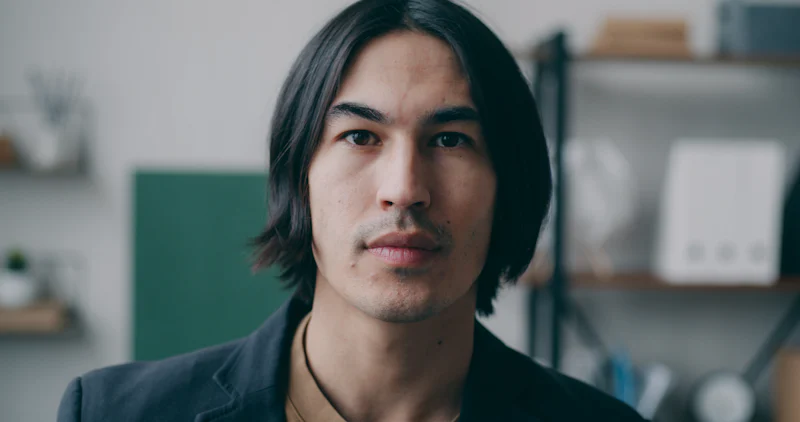
Throughout Chinese history, especially during the Han and Tang dynasties, facial hair was often seen as an extension of one’s character and social standing. The concept of 孝 (xiào), or filial piety, was tied to the belief that the body was a gift from one's parents, leading many to treat hair with significant reverence. However, the cultural landscape changed drastically in the 20th century. During the modernization movements of the late Qing and Republican eras, Western grooming habits were adopted as part of a push toward state-building and international modernization. The beard, once a symbol of scholarly authority, began to be viewed by some reformers as outdated or unhygienic, clearing the path for the modern standard of daily shaving.
Corporate Grooming Standards and Urban Expectations
In modern urban centers like Shanghai, Beijing, and Shenzhen, the corporate world operates on a high-pressure, competitive model where appearance is often viewed as a proxy for attention to detail. Most large firms, whether domestic conglomerates or multinational companies, enforce grooming codes that expect male employees to be clean-shaven. A beard is often perceived in these settings not as a stylistic choice, but as a lack of discipline or an unkempt appearance. This perception is exacerbated by the pace of life; the expectation is that an employee should be prepared for high-stakes meetings at a moment’s notice, and a beard can occasionally create a barrier in client-facing roles where a "fresh" look is the required default.

The Role of Youth Culture and Technology
Beyond the boardroom, the grooming trend is heavily influenced by the aesthetic standards promoted on platforms like 小红书 (Xiaohongshu), often referred to as China's version of Instagram. Influencers and celebrities frequently promote skincare and grooming regimens that focus on brightness, smoothness, and the absence of skin texture. This obsession with a "flawless" look naturally excludes heavy facial hair, which is seen as inconsistent with the popular "youthful" (嫩 - nèn) standard. Technology also plays a part; tools such as sophisticated electric shavers are heavily marketed as essential tech-accessories, reinforcing the idea that grooming is a high-tech task that should be performed daily.
Navigating Modern Social Norms as an Expat
If you are living or working in China, you may notice that even well-maintained beards draw attention in public spaces. This is rarely malicious, but rather a reflection of the fact that full facial hair is simply less common in the general population. In professional settings, if you choose to maintain a beard, it is best practice to keep it strictly trimmed and clearly styled to signal intentionality. While you are unlikely to face direct hostility for sporting facial hair, being aware of these cultural nuances can help you gauge your appearance’s impact in formal interactions or high-level business settings.
Understanding that grooming in China is deeply linked to cultural perceptions of efficiency and social discipline is the best way to navigate personal style choices in a professional environment. How have you found your own grooming habits perceived by your Chinese colleagues or acquaintances?
Quick Takeaways:
- Ancient China associated facial hair with status, but modern norms favor a clean-shaven look.
- Corporate environments in urban centers usually require staff to maintain a professional, shaven appearance.
- The rise of social media beauty standards promotes a youthful and smooth skin aesthetic.
- Maintaining a beard in professional settings requires high-level grooming to signal clear intentionality.
#cultureandlang #expatchina #chinesesociety
