Visitors to the Sanxingdui Museum in Guanghan, Sichuan Province, are often mesmerized by the towering bronze trees and enigmatic golden masks. However, one of the most popular exhibits is far more relatable to the modern palate: a humble three-legged pottery vessel that archaeologists believe is the ancestor of the world-famous Sichuan hot pot.
The Mystery of the Three-Legged Vessel
Unearthed in 1986, the “陶三足炊器” (Three-Legged Pottery Cooking Vessel) stands approximately 45 centimeters tall with a wide basin. While its design is striking, its function is what truly fascinates historians. According to Lei Yu, a prominent Sanxingdui archaeological expert, smoke stains found on the lower part of the legs suggest that fires were lit directly beneath the basin to boil or steam food.
This tripod design allowed for efficient heat distribution, making it a highly scientific piece of ancient kitchenware. While researchers are still working to identify exactly what ingredients were simmered inside, the vessel proves that the Sichuanese passion for communal, simmered meals dates back over three millennia to the Ancient Shu civilization.
From Relics to Restaurants
Today, the city of Guanghan is turning this archaeological discovery into a unique cultural lifestyle. Just a 15-minute drive from the museum lies the Xiangyang Town Hot Pot Park, where the connection between history and gastronomy comes alive.
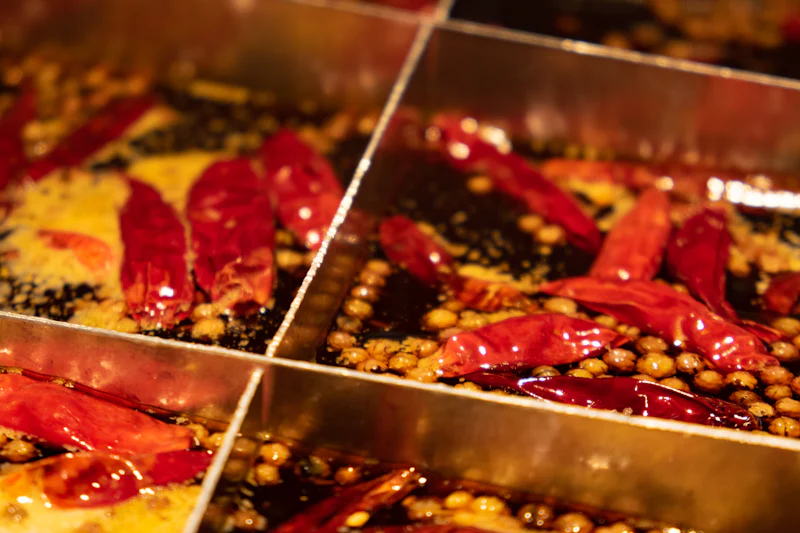
Local entrepreneurs have bridged the gap between the past and present by developing modern cookware inspired by the Sanxingdui tripod. Diners can now enjoy authentic Sichuan hot pot—famous for its fresh tripe and numbing spice—served in specially designed three-legged pots that replicate the aesthetic of the 3,000-year-old artifacts.
A Cultural Industry "Simmering" with Success
The integration of cultural heritage into the culinary industry has proven to be a major economic driver for the region. Guanghan has successfully built a comprehensive "hot pot industry chain" that includes:
- Cultural Gift Boxes: Replicas of the three-legged vessel are sold as functional art pieces, complete with high-quality ingredients and even "History of Hot Pot" board games for families.
- Thematic Tourism: In 2025, Guanghan welcomed over 15.7 million visitors, generating 15.05 billion RMB in tourism revenue.
- Interactive Heritage: By allowing visitors to "eat like an ancient," the city has made history tangible and flavorful.
The success of Sanxingdui’s hot pot culture demonstrates a growing trend in China: the transformation of museum artifacts from static displays into vibrant, everyday experiences. For the international traveler, it offers a rare opportunity to taste the continuity of Chinese civilization, one spicy bite at a time.
#Sanxingdui #SichuanHotPot #ChineseHistory #CulinaryCulture #TravelChina
