Moving a high schooler to a public school in China is an intense academic and cultural immersion that rewards resilience, but it is rarely the right fit for students aiming for Western university admission without extensive supplemental tutoring. While the linguistic benefits are undeniable, the structural demands of the local system create a significant barrier to entry for teenagers not already fluent in Mandarin. Choosing between a local public institution and an international school requires balancing the long-term value of total immersion against the immediate reality of rigorous standardized testing.
The Reality of the Local Curriculum
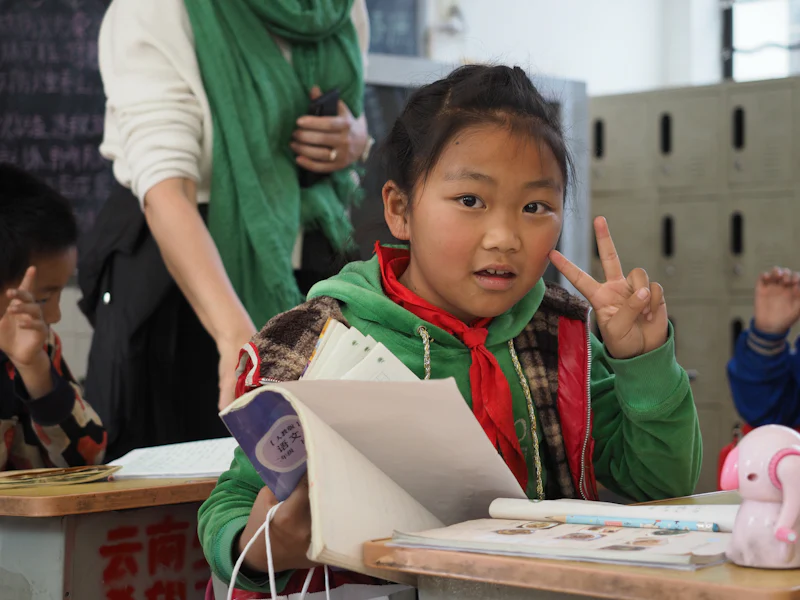
Local Chinese high schools follow the gaokao (national college entrance examination) track, which is notoriously demanding. Students typically attend classes from 7:30 AM to 6:00 PM, often with evening self-study sessions. The curriculum is heavily weighted toward rote memorization and high-speed problem solving in mathematics and sciences. For a foreign student, the biggest obstacle is the pace. If the student is not already proficient in HSK Level 5 or 6 (the highest tiers of the Hanyu Shuiping Kaoshi, or Chinese Proficiency Test), they will likely struggle to follow lectures in history or political studies, where dense, formal terminology is the standard.
Social Integration and Language Barriers
Full immersion in a public school forces a student to utilize Mandarin constantly, which is the most effective way to achieve near-native fluency. However, the social environment is vastly different from international schools. Foreign students may initially feel isolated due to the high academic pressure, which leaves local peers with little free time for socialization. While local students are often curious and helpful, the hierarchical nature of the classroom means students spend most of their time working individually or in strictly organized groups. Parents should expect a period of emotional adjustment where the student feels disconnected from their peers until the language gap narrows.
Comparing Paths to University
International schools generally offer the IB (International Baccalaureate) or AP (Advanced Placement) curricula, which are designed for students applying to universities in the US, UK, or Canada. These schools facilitate a transition that focuses on critical thinking and portfolio building. In contrast, the public school path creates a "binary" outcome: either the student commits fully to the Chinese system—potentially aiming for top-tier local universities like Tsinghua or Peking University—or they become an outsider to their own academic trajectory. If the goal is a Western degree, the public school student often finds themselves paying for private tutors after hours to bridge the gap in Western-style essay writing and extracurricular development.
Managing the Administrative Burden
Securing a spot in a top-tier public school is difficult for foreign passport holders. Most public schools are zoned for local household registration, known as hukou (residency permit). While some elite schools have international departments, these are effectively private programs operating within public campuses, often charging high tuition fees that rival independent international schools. Always verify whether the school you are targeting has an official waijiao (foreign affairs) office capable of handling student visa documentation. Without this specific department, the school cannot legally sponsor your child’s student residence permit.
Total immersion in the Chinese public school system is an incredible cultural gift, but it requires a realistic appraisal of the student’s academic goals and current language ability. Have you encountered success or significant challenges when transitioning your teenager into the local Chinese education system?
