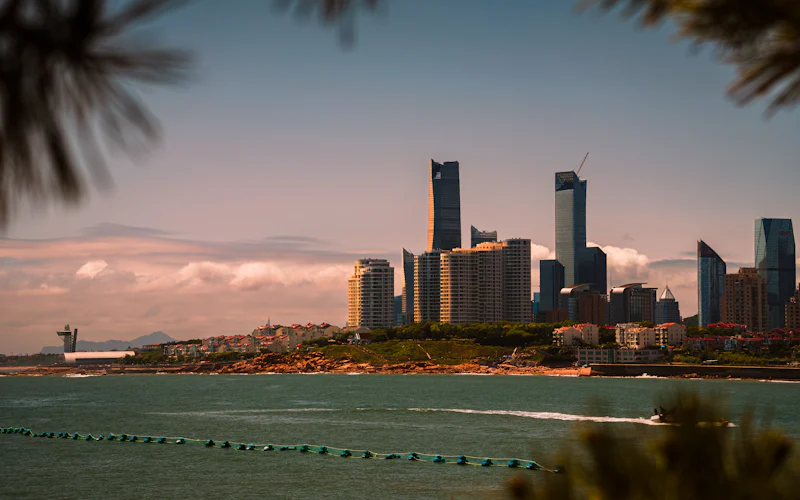
Living in Qingdao as an expat is highly recommended for those seeking a balance between a relaxed coastal lifestyle and the modern amenities of a Tier-2 Chinese city. Unlike the frantic pace of Shanghai or Beijing, Qingdao offers a slower tempo that significantly reduces daily stress while maintaining a robust infrastructure that supports an international standard of living.
The Coastal Advantage and Quality of Life

Qingdao is defined by its geography, featuring long stretches of beach and the iconic Tsingtao Brewery influence. The air quality in Qingdao consistently ranks better than the inland industrial hubs, thanks to the ocean breeze. For those who prioritize outdoor activity, the city offers extensive seaside boardwalks known as the Mu Dao (wooden walkway). Public transportation is modern and reliable, with the Qingdao Metro network expanding rapidly, making it easy to navigate without owning a vehicle. Unlike the congestion found in the capital, the commute times here are manageable, typically averaging under 45 minutes for most residents.
Understanding the Cost of Living
When comparing the cost of living in Qingdao as an expat to major Tier-1 cities, you will find your budget stretches further, particularly regarding housing. Rent for a modern, two-bedroom apartment in the Shinan or Shibei districts—the central hubs—is roughly 30% to 40% lower than comparable spaces in Shanghai. Daily expenses, such as dining out at local eateries or using mobile payment tools like 支付宝 (Alipay) and 微信支付 (WeChat Pay), remain standardized across China. However, imported goods and Western-style groceries can still command a premium, though they are widely available in shopping centers like the MixC mall.
The Expat Community Landscape
Expats in Qingdao form a tight-knit community that is significantly smaller and more accessible than in larger metropolises. Networking is less transactional and more social, often revolving around the city’s international schools and specific expat-friendly venues in the Olympic Sailing Center area. While the language barrier can be higher here than in Shanghai, the local population is generally welcoming. Engaging with the city becomes much easier if you learn basic Mandarin phrases for ordering food or using the 高德地图 (Amap) navigation tool, which is far more accurate for local bus routes than international alternatives.
Evaluating Work-Life Balance
Professional opportunities in Qingdao are primarily focused on shipping, manufacturing, and education. If you are moving to Qingdao for a role in these sectors, you will likely find a corporate culture that values efficiency during work hours but respects the boundaries of personal time more than in hyper-competitive cities. The work-life balance is arguably the city’s strongest asset; after-work hours are frequently spent at the beach or enjoying the local coffee shop culture, which has exploded in popularity over the last three years. The city also hosts an annual 青岛啤酒节 (Qingdao International Beer Festival), which serves as a massive cultural touchpoint for both locals and international visitors, fostering a sense of community integration that is hard to replicate elsewhere.
Moving to a new city is always a transition, but selecting a location that aligns with your personal pace of life is the single most important factor for long-term satisfaction in China.
What is your primary hesitation when considering a move to a coastal city like Qingdao?
Quick Takeaways:
- Expect rent to be 30-40% cheaper than in major Tier-1 cities like Shanghai.
- Prioritize living near the city center or metro lines for maximum daily convenience.
- Download Amap for accurate local transit data that beats international map applications.
- Join local community groups to bridge the gap in the smaller expat network.
#livinginqingdao #expatchina #movingtochina
