Last Updated: March 5, 2026 | Audience: Importers, exporters, investors, cross-border businesses, and anyone tracking US-China economic relations

Table of Contents
- The Landmark Ruling: Supreme Court Strikes Down Trump's IEEPA Tariffs
- The New Tariff Framework: What Replaced the Voided Tariffs?
- Current US-China Tariff Rates: A Full Breakdown
- The 6th Round of Trade Talks: What's on the Table?
- Trump's Beijing Summit: A Historic Trip That Could Reshape Trade
- What Trade Deal Could Be Reached? Scenarios & Analysis
- Real-World Impact: Consumers, Importers & Businesses
- References
1. The Landmark Ruling: Supreme Court Strikes Down Trump's IEEPA Tariffs
On February 20, 2026, the US Supreme Court delivered a seismic ruling in the trade war's legal history: in a 6–3 decision, the Court struck down President Trump's broad import tariffs imposed under the International Emergency Economic Powers Act (IEEPA), declaring them an unconstitutional overreach of presidential authority.
Chief Justice John Roberts, writing for the majority, stated:
"IEEPA does not authorize the President to impose tariffs. When Congress grants authority to impose tariffs, it does so expressly and with careful guardrails — something it did not do here."
Notably, the ruling was not a partisan split. Two Trump-appointed justices — Neil Gorsuch and Amy Coney Barrett — sided with the three liberal justices, lending the decision exceptional legal finality and making a legislative reversal unlikely in the near term.
Which Tariffs Were Struck Down vs. Upheld?
| Tariff | Legal Basis | Status After Ruling |
|---|
| "Liberation Day" reciprocal tariffs (April 2025) | IEEPA | ✅ Voided |
| Fentanyl tariffs on China (20%, reduced to 10%) | IEEPA | ✅ Voided |
| Steel & aluminum tariffs (25–50%) | Section 232, Trade Expansion Act | ❌ Unaffected |
| Auto & parts tariffs (25%) | Section 232 | ❌ Unaffected |
| Copper tariffs (50%) | Section 232 | ❌ Unaffected |
| Section 301 tariffs on China (7.5–100% by list) | Section 301, Trade Act of 1974 | ❌ Unaffected |
2. The New Tariff Framework: What Replaced the Voided Tariffs?
Within hours of the ruling, the Trump administration responded aggressively, calling the decision "a disgrace" and immediately invoking alternative legal authority:
- February 20: Invoked Section 122 of the Trade Act of 1974 to impose a 10% global import surcharge, effective immediately
- February 21: Raised the rate to 15% — the statutory ceiling under Section 122 — citing persistent trade deficits
- Simultaneously: Launched new Section 301 and Section 232 investigations into specific industries, intended to build a permanent replacement tariff architecture before Section 122 expires
⚠️ Key Limits of Section 122
Section 122 is a stopgap, not a long-term solution. It carries three critical constraints:
- The surcharge expires after 150 days (around mid-July 2026) unless Congress approves an extension
- The maximum statutory rate is 15% — far lower than the 34–54% IEEPA tariffs previously in force
- It was designed for balance-of-payments emergencies, not as a permanent trade weapon
This means the administration is now in a 5-month window to build new legal justification — through Section 301 reviews and Section 232 investigations — before the 15% tariffs expire.
3. Current US-China Tariff Rates: A Full Breakdown
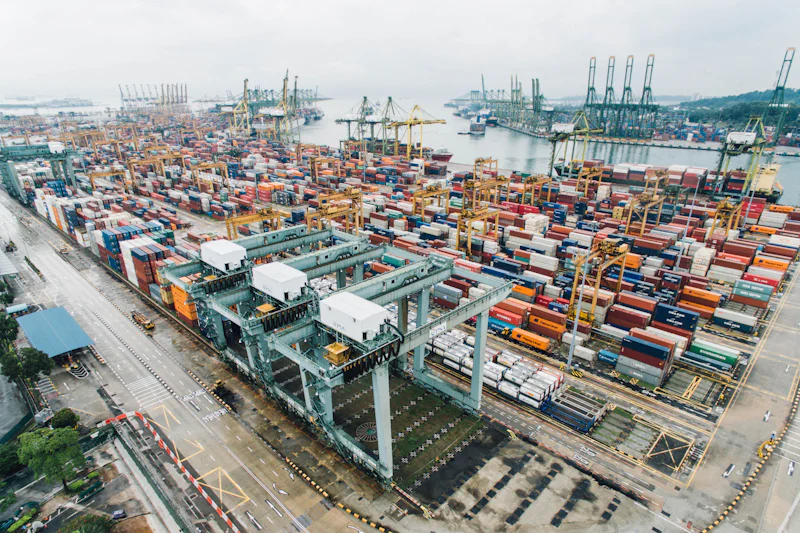
Understanding what US companies actually pay on Chinese goods right now is complex, because tariffs are stacked — multiple duties apply simultaneously to the same product.
The Busan Truce: Context Before the Ruling
In October 2025, following a Trump–Xi summit in Busan, South Korea, both sides agreed to a trade truce:
- The US reduced the IEEPA "Liberation Day" tariff from 34% to 10% (in effect through November 10, 2026)
- The US canceled the additional fentanyl tariff reduction, bringing that rate to 10%
- China suspended retaliatory tariffs on US agricultural goods and paused rare earth export controls
- Both sides committed to extending tariff exclusions on 178 Chinese product categories through November 2026
Current Effective Tariff Rates on Chinese Goods (as of March 2026)
According to Global Trade Alert via China Briefing, the trade-weighted average tariff on China dropped from 36.8% to 29.7% after the Supreme Court ruling and the transition to the 15% global surcharge. The US Congressional Research Service puts the current average at approximately 34%, excluding retaliatory tariffs.
| Tariff Layer | Rate | Products Covered | Status |
|---|
| MFN (WTO baseline) | 3.3% | All imports | ✅ Active |
| Section 301 – List 1 & 2 | 25% | Chemicals, machinery, vehicles, electronics | ✅ Active |
| Section 301 – List 3 | 25% | Textiles, food, metals, plastics, misc. | ✅ Active |
| Section 301 – List 4A | 7.5% | Consumer goods, apparel, phones, appliances | ✅ Active |
| Section 301 (4-Year Review) | 25–100% | EVs, solar cells, semiconductors, medical gloves, critical minerals | ✅ Active (2024–2026) |
| Section 232 | 50% | Steel & aluminum products | ✅ Active |
| Section 232 | 25–50% | Autos, auto parts, copper, lumber | ✅ Active |
| Global surcharge (§122) | 15% | Broad imports (some exclusions) | ✅ Active (expires July 24, 2026) |
| IEEPA Liberation Day tariff | 34% → 10% (voided) | All goods (was suspended at 10%) | ❌ Voided |
| IEEPA Fentanyl tariff | 20% → 10% (voided) | All goods | ❌ Voided |
Estimated total effective tariff on Chinese goods: 22%–50%+ depending on product category
For reference, the Wharton Budget Model calculated China's effective tariff rate at 37.4% in October 2025 before the Busan truce. After the truce and the court ruling, that figure has declined but remains the highest of any major US trading partner.
4. The 6th Round of Trade Talks: What's on the Table?

On February 26, 2026, China's Ministry of Commerce confirmed that the two countries are maintaining communication at "all levels" through established trade consultation mechanisms, and that the 6th round of US-China trade talks is expected in the near term.
According to Bloomberg, the talks will be held at cabinet level — US Treasury Secretary Scott Bessent and Chinese Vice Premier He Lifeng are expected to meet in Paris in mid-March ahead of Trump's planned Beijing summit.
China's Commerce Ministry spokesperson stated:
"China is willing to work with the US to properly implement and uphold the consensus reached at the Busan summit and the February 4 phone call between the two heads of state — managing differences through equal consultation and expanding practical cooperation."
Anticipated Agenda Items
- Post-§122 legal framework: Establishing a durable tariff structure before the 150-day surcharge expires in July
- Agricultural purchases: China renewing pledges on US soybeans, sorghum, corn, and wheat
- Energy imports: Expanded Chinese purchases of US LNG and crude oil
- Boeing aircraft: Reported negotiations for China to purchase up to 500 Boeing jets, which would be a major commercial breakthrough
- Technology controls: Scope of easing US chip export restrictions in non-military sectors
- Rare earths: Whether China's suspension of export controls on critical minerals will be extended or formalized
- Taiwan and security: Likely to be raised but unlikely to yield formal agreements
5. Trump's Beijing Summit: A Historic Trip That Could Reshape the Trade War

White House officials confirmed in late February 2026 that President Trump will visit Beijing from March 31 to April 2, for a summit with President Xi Jinping. This would be Trump's first visit to China in his second term — and his first time in Beijing since 2017.
Trump himself commented:
"I have a very good relationship with President Xi. I'll be going to China in April. It's going to be a very special trip."
He also nostalgically recalled his 2017 state visit: "I've never seen so many soldiers, all the same height."
Why This Summit Matters Now
The summit is being driven by a convergence of urgent pressures:
- The Supreme Court ruling created a legal vacuum in the tariff framework; both sides need a new stable foundation
- The §122 tariff clock is ticking — 150 days runs out around July 24, requiring a deal or Congressional action
- US military operations in Iran have raised energy security concerns for China, which is Iran's largest oil buyer
- Deep structural issues — tech controls, rare earths, Taiwan, industrial overcapacity, IP — all require high-level political direction
- The bilateral trade deficit remains a central Trump concern, with the US pushing China toward a "managed trade" framework
6. What Trade Deal Could Be Reached? Scenarios & Analysis
🇨🇳 What China Is Likely to Offer
| Area | Specific Commitments |
|---|
| Energy | Increased purchases of US crude oil and LNG; China already imports 690,000 bbl/day from the US |
| Agriculture | This-season soybean purchases up to 20 million tons; commitment to 25 million tons next season; expanded corn and wheat imports |
| Manufacturing/Aviation | Potential purchase of up to 500 Boeing jets — a massive commercial win for the US |
| Fentanyl | Continued cooperation to prevent fentanyl precursors from entering the US |
| Rare earths | Formal extension or upgrade of the rare earth export controls suspension |
| Investment | Chinese companies investing in the US to create American jobs |
🇺🇸 What the US May Concede
- Committing not to impose new tariff escalations in exchange for Chinese purchases
- Preserving China's Permanent Normal Trade Relations (PNTR) status — critical to maintaining existing WTO-level trade
- Selective relaxation of tech export controls in civilian-use categories
- Extending tariff exclusions on specific Chinese product categories
🚧 Non-Negotiable Red Lines
- Restrictions on technology transfers enhancing Chinese military capability
- US arms sales to Taiwan
- Any language that could be interpreted as endorsing Beijing's unification agenda
Expert Outlook
The New York Times cautions: "Expecting a grand bargain that resolves everything is unrealistic." However, Trump may claim wins on specific, quantifiable issues — particularly a headline-grabbing Chinese commitment to buy hundreds of billions in US goods, echoing the Phase 1 deal structure from his first term.
The SCMP reports that both sides are already exploring structured joint ventures and licensing deals, with Beijing seeking protection for Chinese firms operating in the US, and Washington eyeing better market access for US companies in China.
7. Real-World Impact: Consumers, Importers & Businesses

🛒 For US Consumers
The Yale Budget Lab found that the IEEPA tariffs before the ruling had already caused US consumers and businesses to absorb 31%–63% of tariff costs in the form of higher prices. The new 15% surcharge continues to inflate costs on imported goods — particularly:
- Consumer electronics (smartphones, laptops, tablets)
- Apparel, footwear, and home goods
- Industrial inputs and machinery
Democratic senators have called on the administration to issue refunds to businesses that overpaid under the now-void IEEPA tariffs, but the logistical complexity is enormous.
🏭 For Chinese Exporters & Manufacturers
The removal of the IEEPA tariffs is a meaningful relief. The trade-weighted average tariff on Chinese goods has dropped from approximately 36.8% to 29.7% — but uncertainty is the overriding challenge:
- What happens after July 24? No one can be certain whether the 15% surcharge will be replaced with something higher, lower, or sector-specific
- The China+1 diversification strategy remains relevant: many supply chains that shifted to Vietnam, Mexico, and India during the trade war are not easily reversed
- Exporters in consumer electronics, textiles, furniture, and toys remain most exposed
📦 For Cross-Border E-Commerce Sellers (Amazon, Temu, Shein)
- The de minimis exemption (goods under $800 entering duty-free) remains under legislative threat — any deal that includes tightening this rule would directly hit Chinese e-commerce platforms with major US exposure
- Constant policy swings make pricing and inventory strategy extremely difficult to execute with confidence
- The recommended approach: monitor the outcome of the Paris talks and the Beijing summit closely before making major procurement decisions for Q3/Q4 2026
📈 For Investors
The ruling has triggered a wave of customs refund claims from US importers who paid duties now deemed unconstitutional. If refunds materialize at scale, they would improve cash flow for US importers, indirectly stabilizing order volumes for Chinese suppliers.
IngStart's analysis identifies this as a "strategic window period": Chinese manufacturers in sectors with high IEEPA tariff exposure who locked in contracts at discount prices may now enjoy margin recovery — at least until the new tariff regime is finalized.
The 2026 Trade War Timeline at a Glance
October 2025
└─ Trump–Xi Busan Summit → Trade truce: IEEPA tariffs reduced to 10%
├─ China: lifts agricultural retaliatory tariffs
└─ US: cancels fentanyl surcharge, extends 178 product exclusions
February 20, 2026
└─ SCOTUS rules IEEPA tariffs unconstitutional (6–3)
├─ Voided: 20% fentanyl tariff + 34% reciprocal tariff (10% truce rate)
└─ Unaffected: Section 301 + Section 232 tariffs remain in force
February 20–21, 2026
└─ Trump invokes Section 122 → 15% global import surcharge
├─ 150-day clock starts → expires July 24, 2026
└─ New Section 301 & 232 investigations launched
March 2026 (mid-month)
└─ 6th Round US-China Trade Talks (Paris)
└─ Bessent + He Lifeng; Boeing, soybeans, energy on agenda
March 31 – April 2, 2026
└─ Trump visits Beijing (expected)
└─ Trump–Xi Summit: potential new trade deal framework
References
- Supreme Court Ruling Analysis — Fangda Partners
- Asian Economies After the Tariff Ruling — BBC Chinese
- Supreme Court Strikes Down Trump Tariffs — Xinhua
- US-China Tariff Rate Full Breakdown — China Briefing
- Congressional Research Briefing on US-China Tariffs — Global Sanctions
- Effective Tariff Rates (Wharton) — Penn Wharton Budget Model
- State of US Tariffs — Yale Budget Lab
- Trump 2.0 Tariff Tracker — Trade Compliance Resource Hub
- 6th Round Trade Talks Confirmation — Xinhua
- 6th Round Trade Talks — CCTV News
- US-China Trade Chiefs to Meet Before Summit — Reuters
- Trump to Visit Beijing March 31 – April 2 — Zaobao
- Trump–Xi Meeting Outcomes & Implications — China Briefing
- Trump Visit to China, Trade Policy in Focus — Japan Times
- US-China Relations 2026: What to Watch — China Briefing
- US-China Trade War Latest — South China Morning Post
- Impact on Chinese Firms Post-Ruling — Caixin Opinion
- Strategic Window for Investors — IngStart
- Businesses and Consumers Face Uncertainty — BBC
- China Bulletin, Feb 2026 — US-China Economic and Security Review Commission
Disclaimer: US-China tariff policy remains in rapid flux. All information reflects the situation as of March 5, 2026. Businesses and investors are strongly advised to consult qualified trade lawyers or compliance advisors before making major decisions.
