Since Chinese New Year (CNY) is such a massive global event, I went down a rabbit hole reading about its origins. It turns out this isn’t just about dumplings and days off—the history goes back about 3,500 years and involves everything from mythical beasts to calendar reforms.
I summarized the cool parts below for anyone interested in why we actually celebrate it.
When is it, exactly?
It changes every year because it follows the Lunisolar calendar (a mix of sun and moon cycles). It usually lands on the second new moon after the winter solstice.
- Gregorian dates: Generally between Jan 21 and Feb 20.
- Why “Spring Festival”? Even though it’s usually freezing in China during this time, it technically marks the “Beginning of Spring” (Lichun) and the desire for new life.
The Legend: Why all the Red and Noise?
If you’ve ever wondered why CNY is so loud and red, it’s because of a mythical beast called “Nian” (which literally means “Year”).
Legend has it that Nian would come out on New Year’s Eve to eat livestock and people. A wise old man eventually figured out Nian’s three weaknesses:
- Loud noises
- Fire
- The color red
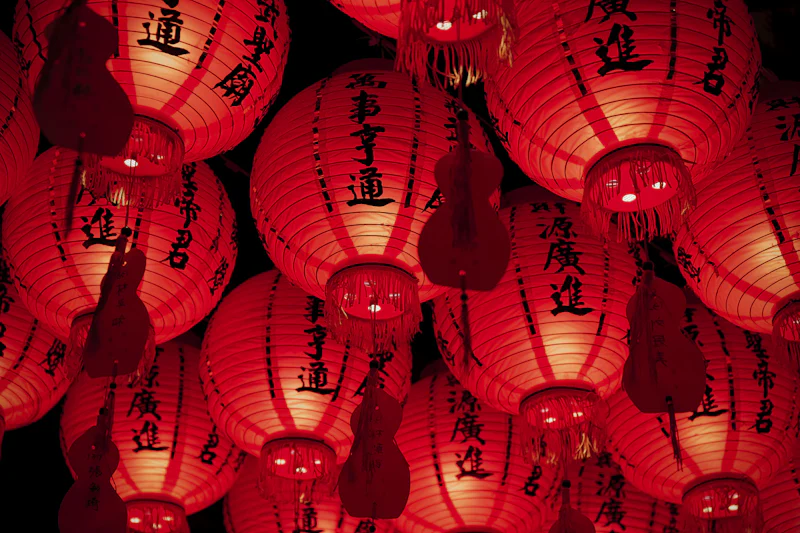
So, people started hanging red lanterns, pasting red scrolls, and burning bamboo (the ancestor of firecrackers) to keep the monster away.
A Quick Timeline of Evolution
The holiday didn’t start the way it looks today. It evolved over dynasties:
- Shang Dynasty (1600–1046 BC): The origin. It started as a sacrificial ceremony to honor gods and ancestors.
- Zhou Dynasty (1046–256 BC): The term “Nian” appears. It became a time to worship nature and bless the harvest.
- Han Dynasty (202 BC–220 AD): The date was officially fixed to the first day of the first lunar month. Crackling bamboo became a trend.
- Wei & Jin Dynasties: The vibe shifted from purely religious to entertainment. Customs like family dinners, cleaning the house, and staying up late (“shousui”) started here.
- Tang, Song, & Qing Dynasties: This is when it got modern. The economy was booming, so we got firecrackers, dumplings, dragon/lion dances, and lantern shows. It became a social event rather than just a ritual.
Modern Times: WeChat and TV
In 1912, the government actually tried to abolish the lunar calendar in favor of the Gregorian one (Jan 1st), but the traditions ran too deep. After 1949, it was officially listed as a public holiday under the name “Spring Festival.”
Today, while some old traditions are fading, new ones are taking over:
- Digital Red Envelopes: Instead of cash, people send money via WeChat.
- CCTV Gala: The world’s most-watched TV show is now a staple background noise for dinner.
- Travel: It’s the largest human migration on Earth as people travel home or go overseas.
Discussion:
Does anyone here celebrate CNY? I’m curious if you stick to the traditional “cleaning and dumplings” or if you’ve adopted newer traditions?
